The doors in the Old Town tell you more about the history of the place than almost anything else. Not individually but as a collection. Walk the streets slowly and you’re looking at five or six centuries of entrances, repairs, replacements and the occasional inexplicable decision.
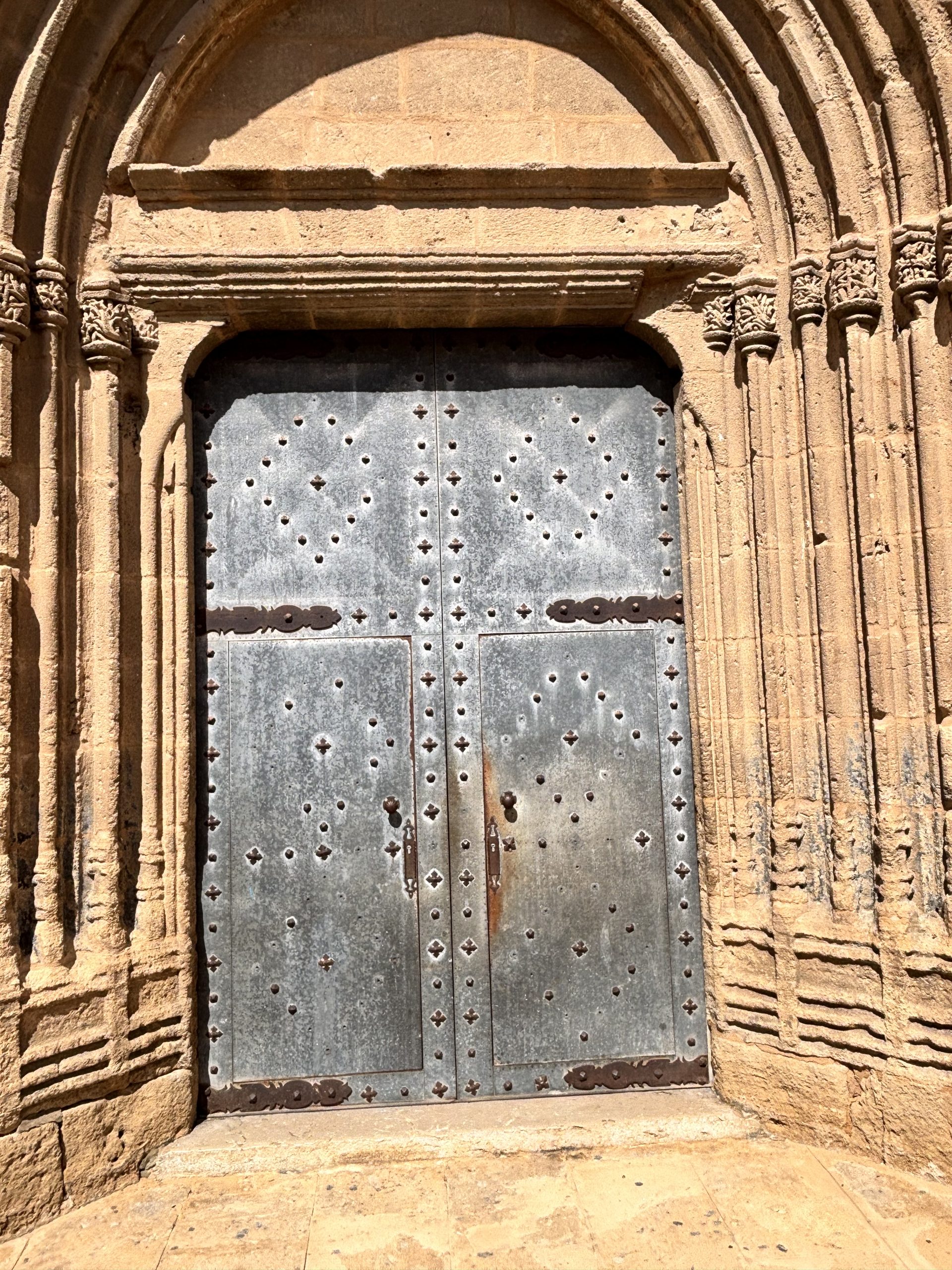
The range is wider than you’d expect. At one end, the Gothic portal of San Bartolomé, the main entrance to the church, carved in the 15th century from Tosca, as elaborate as anything you’d find in a city cathedral and somehow still just sitting there on a quiet street. At the other end, a plain wooden door that was probably replaced thirty years ago and hasn’t been touched since.
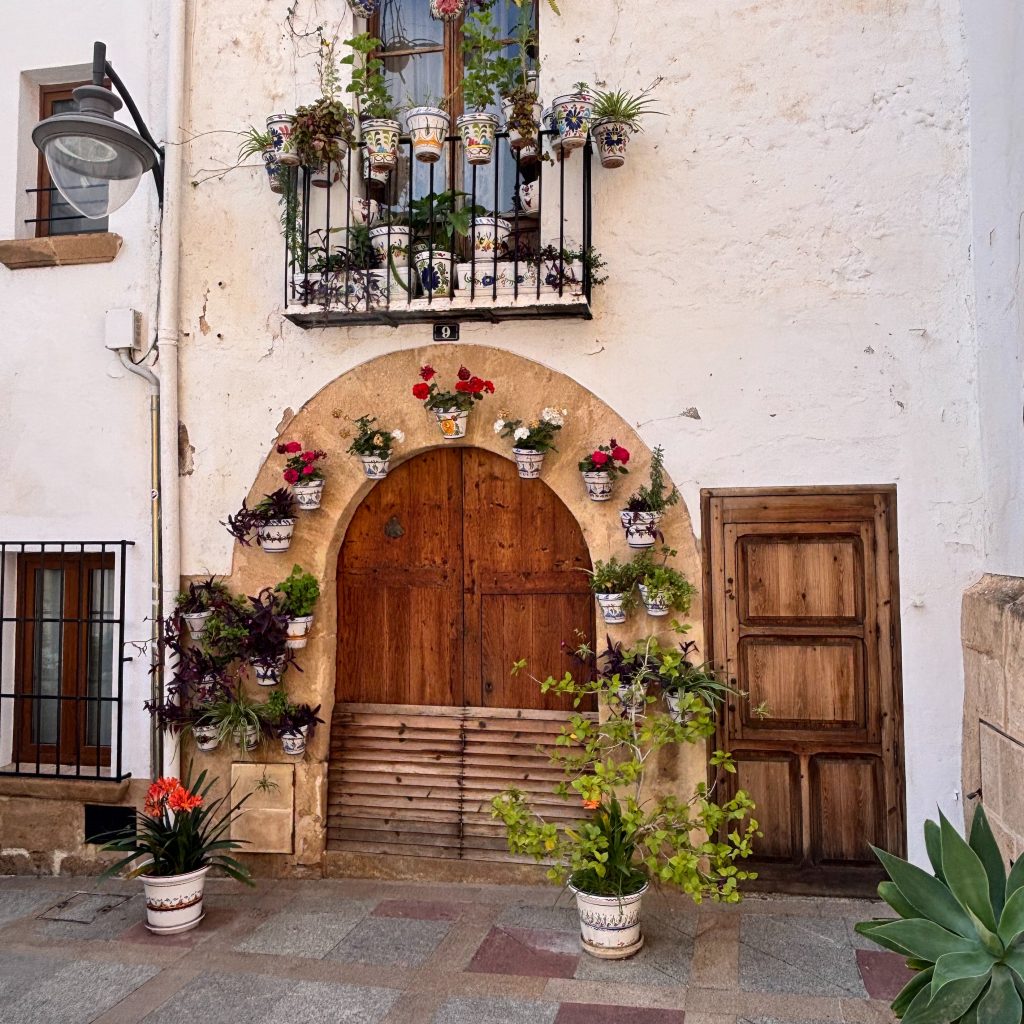
Most fall somewhere between. Panelled wood in various states of maintenance, some recently restored to a shine that looks slightly too good for the street, others worn to a colour and texture that took centuries to arrive at. The Tosca arches that frame them, particularly the rounded arches on the residential streets are often the most interesting part. The door is a replacement. The arch is original.
The studded metal doors on the church are worth looking at closely. The pattern of the ironwork is not decorative in the way a blacksmith’s flourish is decorative, it’s structural, each stud doing a job, the whole thing built to last and to resist.
Somewhere in a stepped alley that takes some finding is a blue door. It has no business being that colour. It is somehow exactly right.
The knockers mounted on these doors are in Door Knockers. The stone surrounds and arches that frame them are in Stone.