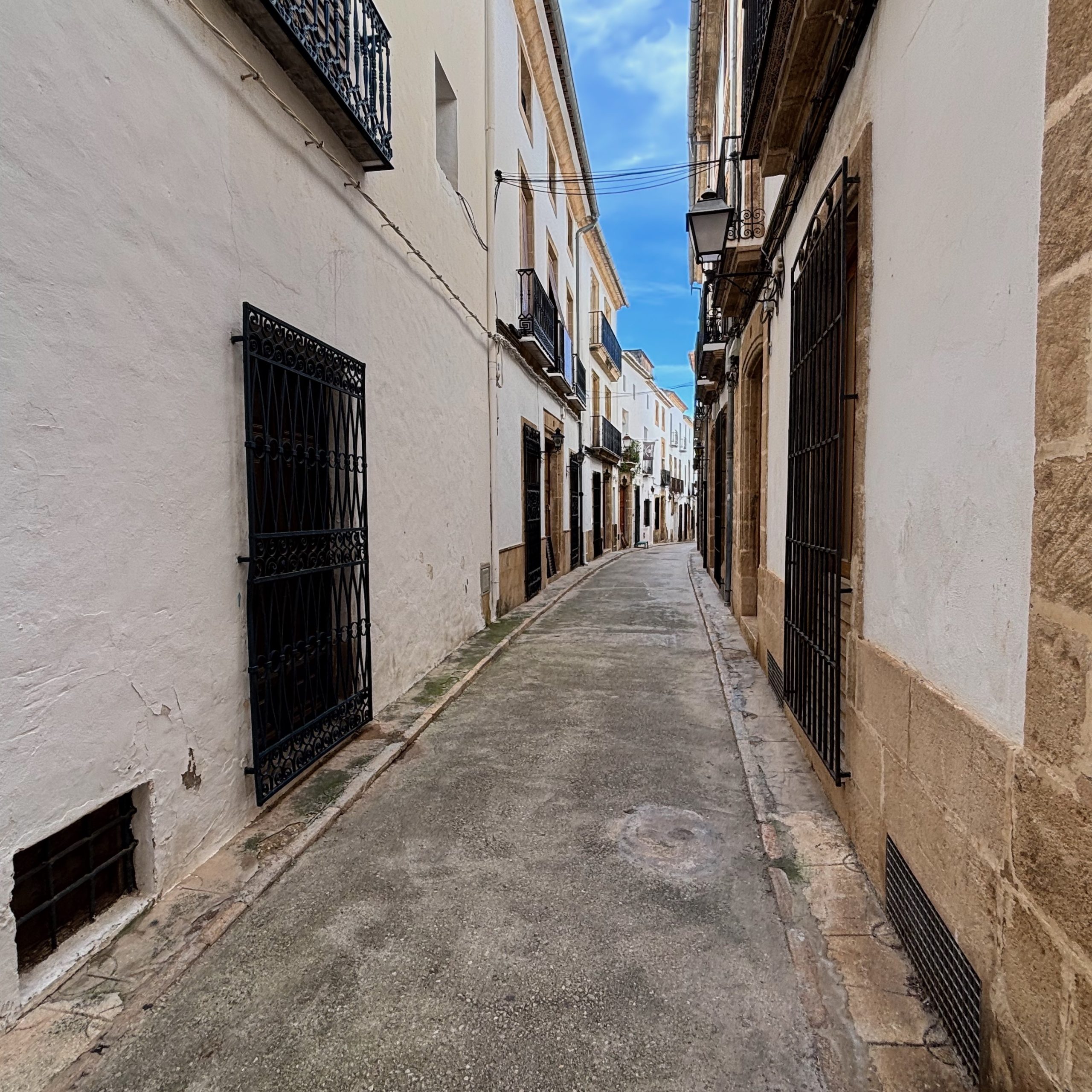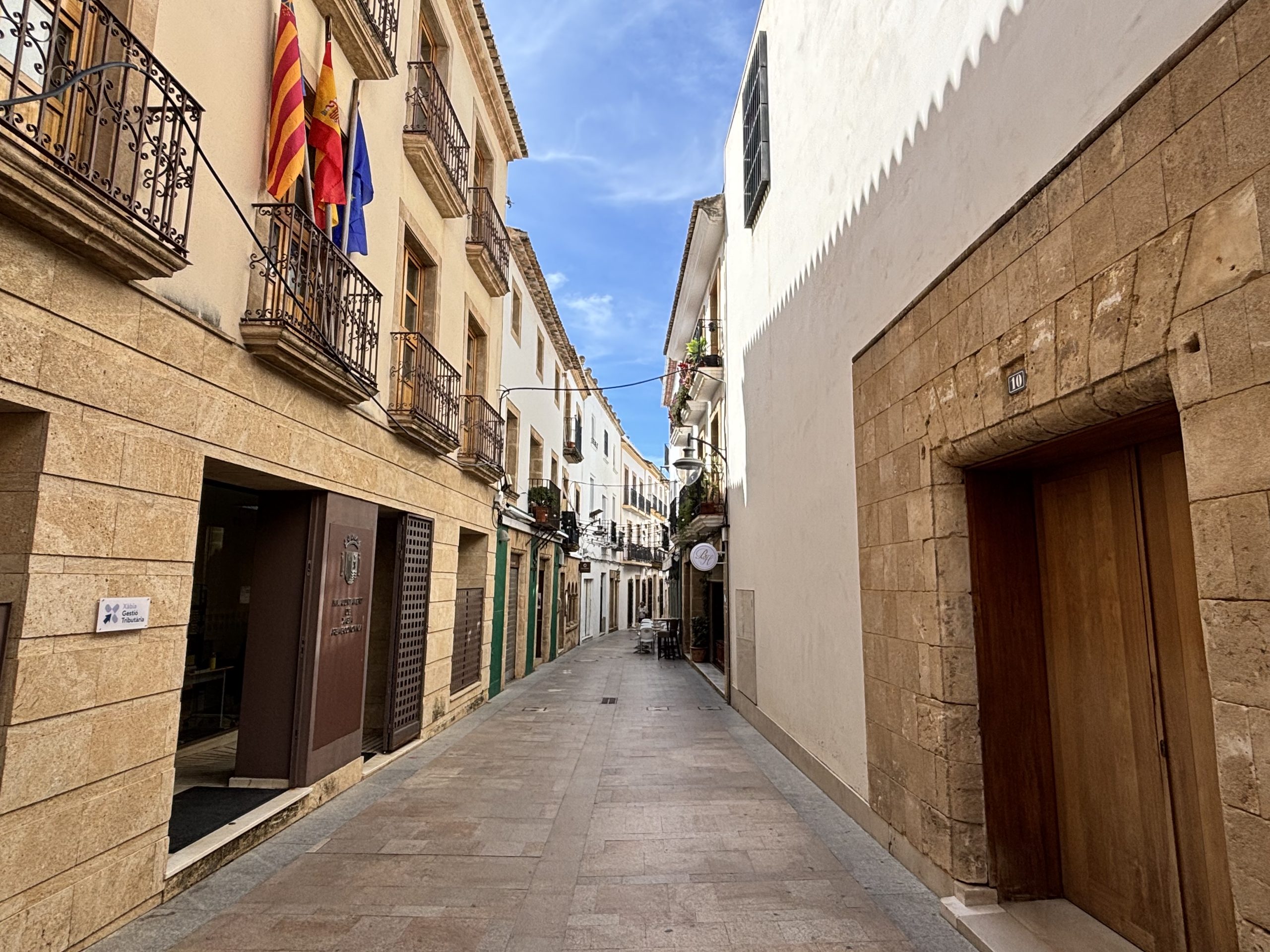

The streets in Jávea’s Old Town are not narrow by accident or by poverty or poor planning. They were built that way deliberately – tight corners, sudden changes in level, passages that force you to slow down and lose your bearings. The Moorish threat was still real when most of these routes were laid out and the layout reflects that. A street you can’t ride a horse through at speed is a street that works in your favour.
San Buenaventura is the one that shows it most clearly. Walk it and you understand immediately that the width was a well thought out decision, not a constraint. The corners are sharp enough to break your line of sight. The walls are close enough that two people passing each other notice each other. It hasn’t changed because there’s no reason to change it as it still works as a street. And it’s wonderful.
The wider streets around the Plaça de l’Església are a different proposition – commercial, open, built for the market and the church and the Ayuntamiento rather than for defence. Cars park there now in a way that would have been unimaginable when the square was laid out, and yet it absorbs them without looking entirely wrong.
What the photographs here show is the full range, from the tightest residential passages to the planted pedestrian alleys that have been tidied up in recent decades, to the cafe-lined streets that function today much as they always have, just with different furniture outside.
The Tosca corners at street level tell their own story. Where stone meets pavement at a tight angle and people have been turning that same corner for centuries, the surface wears in a very specific way. Each corner has its own story.
The surfaces and corners of these streets are documented in Wear. The stone they’re built from is in Stone.
Eric’s memories of the streets can be found here: https://javeaoldtown.com/the-old-town-i-remember/