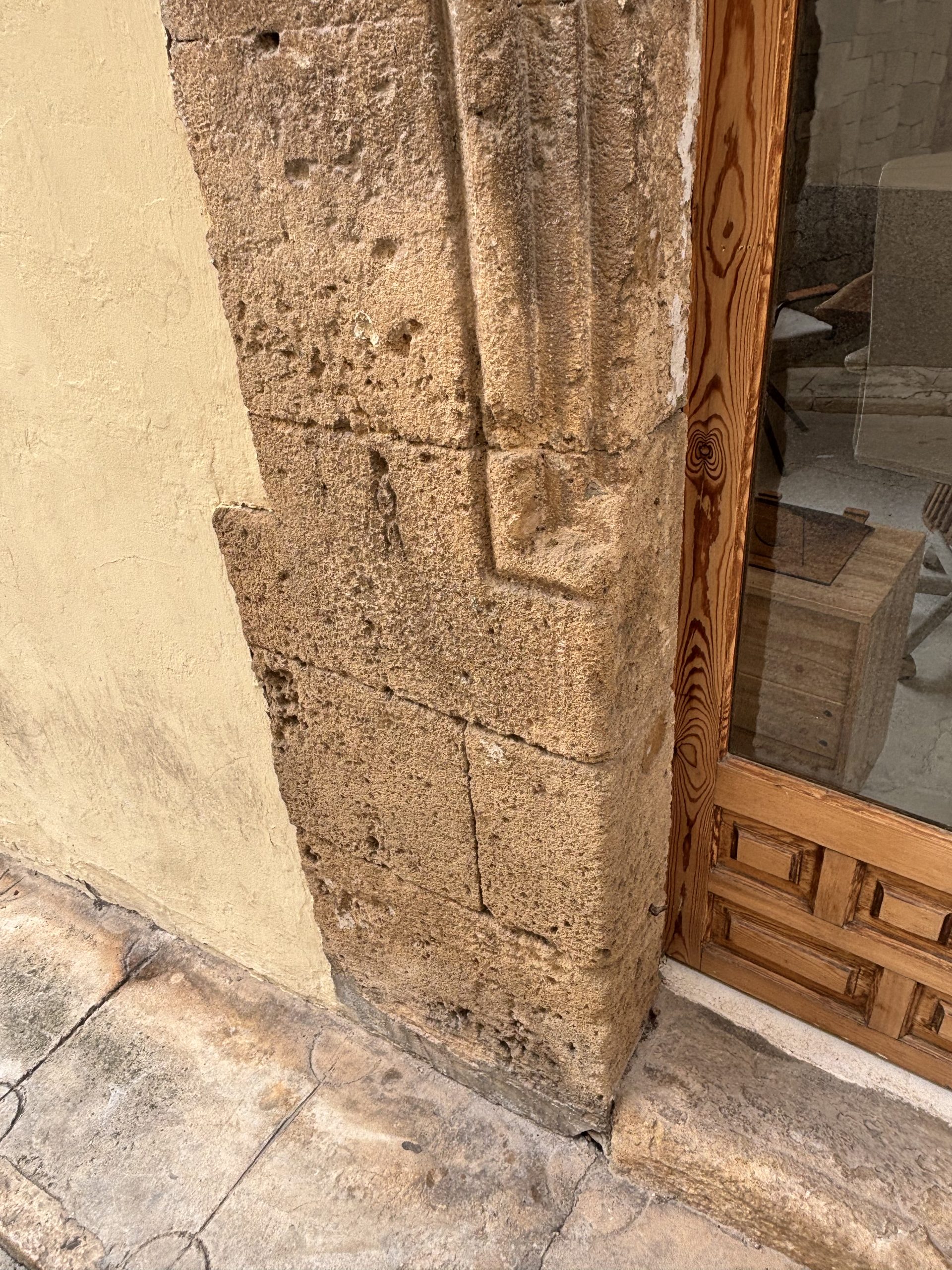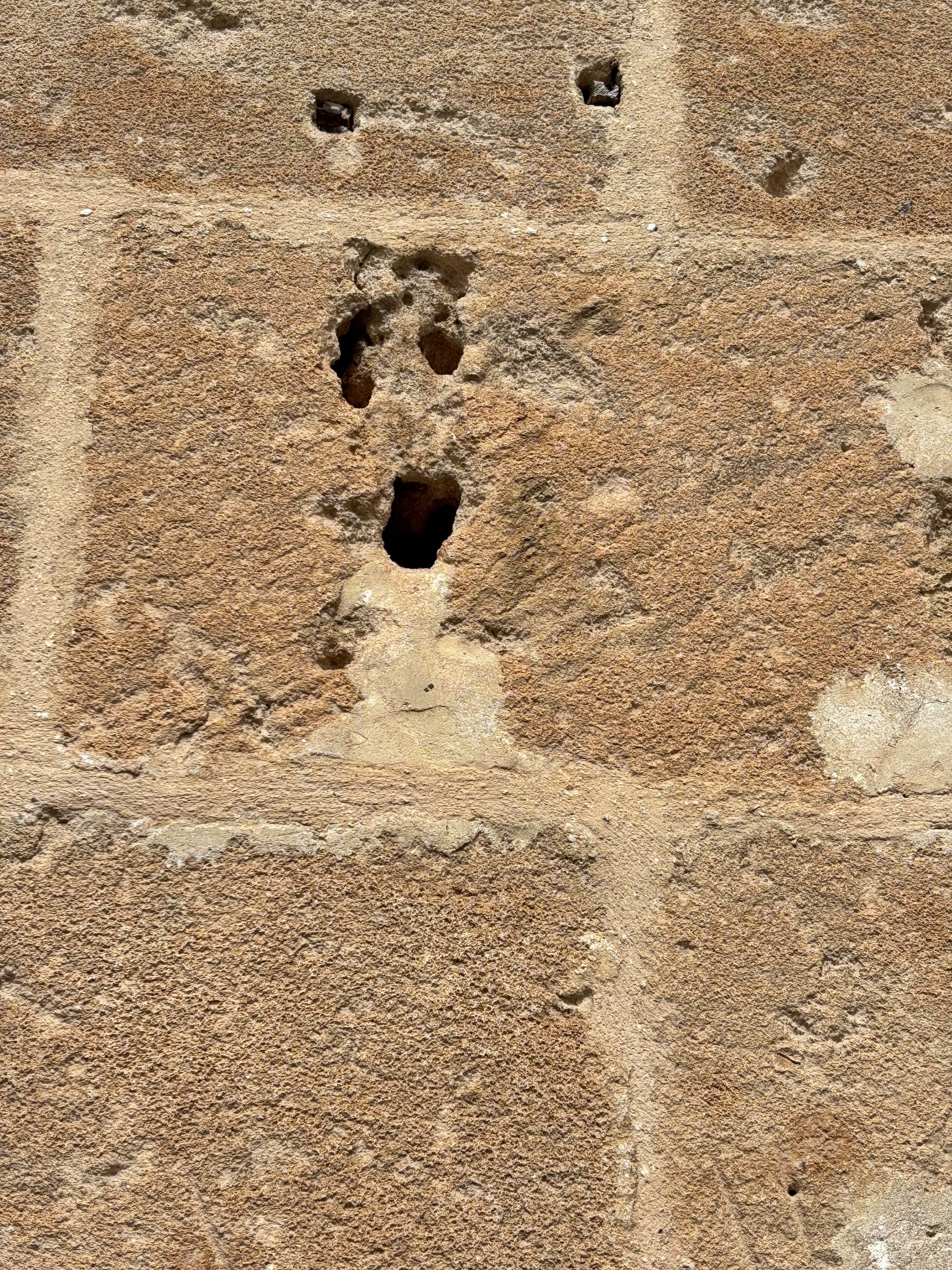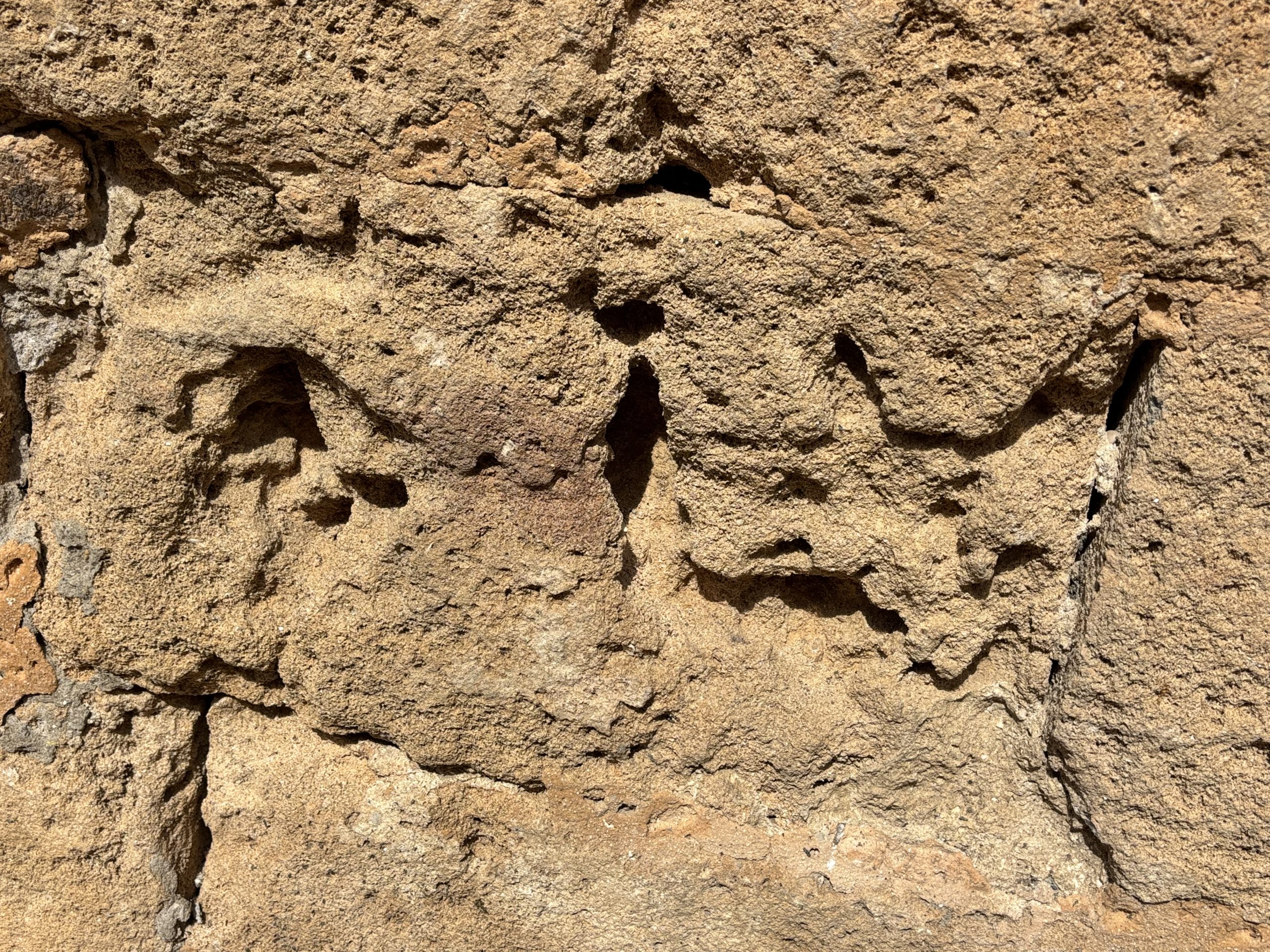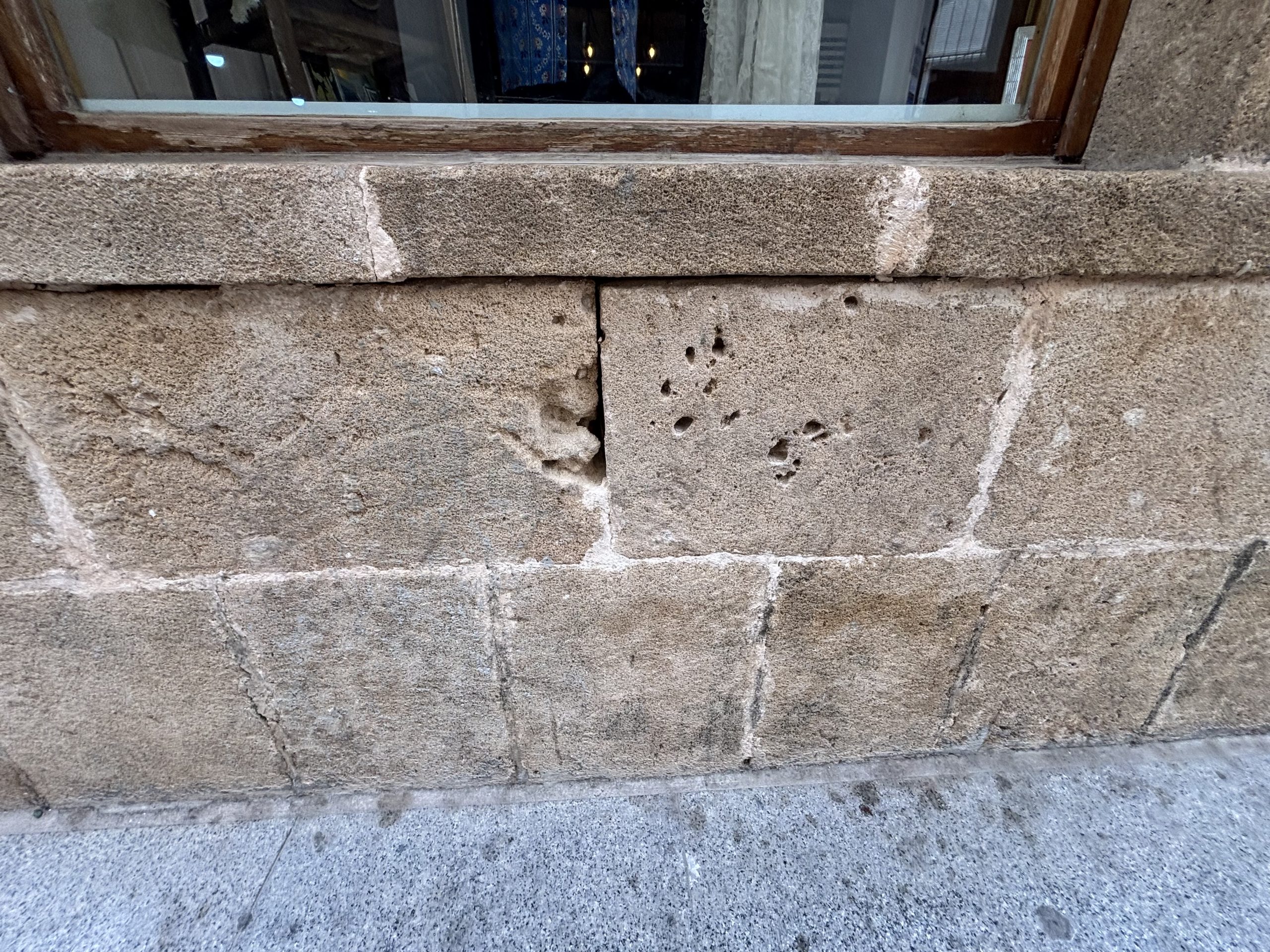

Wear is the honest record of a place. It doesn’t editoralise. It just shows you what has been touched most, what has been exposed longest, and what has been repaired and exposed again.
The most telling detail in the Old Town is under the rendered walls. Where plaster has peeled, and it peels constantly in the salt air – you see what was always there: Tosca block, the same stone as everything else, rendered over at some point in the last century by someone who thought it needed covering up. It didn’t. The render is what needs replacing.
The stair edges show it most clearly in terms of use. Centuries of feet taking the same step, always on the same part of the tread, wearing the Tosca down in a curve that no stonemason cut. The handrails are smooth in the same way, not polished, just used. There’s a difference.
The corners where streets meet are worn to a radius that took generations to arrive at. Shoulders, loads, cart wheels all taking the same tight turn, all removing a little more material each time. The sharpest corners in the Old Town are the newest ones. The roundest are the oldest.
The pitting on wall faces is erosion, not history. Salt air gets into the porous Tosca surface, moisture follows, and the stone breaks down unevenly. The Civil War explanation is more interesting. The geology is more likely.
At the base of walls, damp and rust leave their own marks – staining that records where water has run and where ironwork has bled into stone over decades. Nobody cleans it because it’s part of what the place looks like.
The stone these surfaces are made from is covered in Stone. The streets where this wear is most visible are in Streets.