The same stone appears everywhere in the Old Town because it came from one place, the Tosca quarries at Muntanya beach, a mile down the coast. What changes is what time and use have done to it.
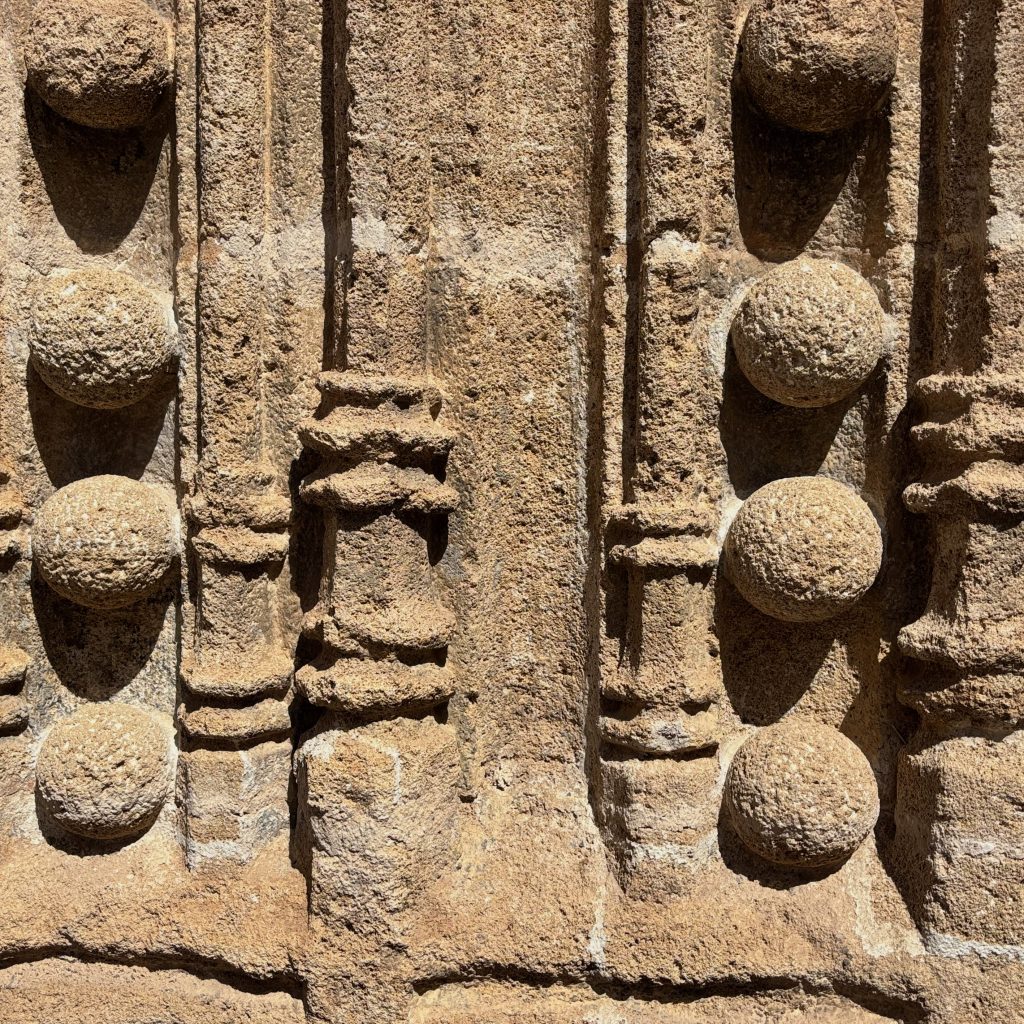
Fresh cut, Tosca is relatively soft and easy to work. That’s why the decorative detail on San Bartolomé is so elaborate – the carved balls on the exterior buttresses, the laurel wreath around the CONSTRUIDA inscription, the moulded architrave profiles on the doorways. The stone allowed it. Exposed over centuries to salt air, moisture and sun, it does something more interesting – it develops a surface that no new material can replicate.
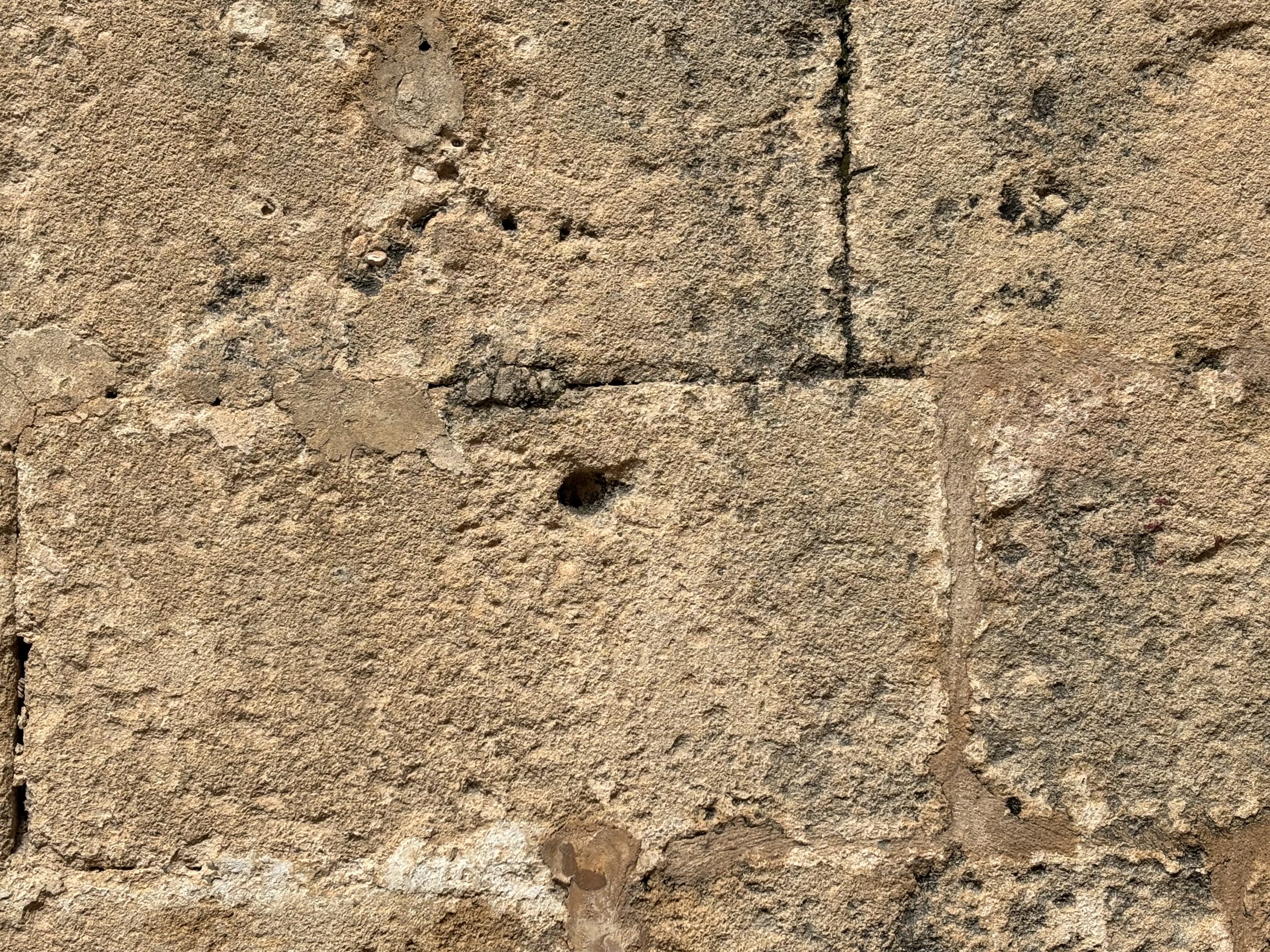
The pitting you see in older sections of wall is not, despite the local debate, most likely bullet holes from the Civil War. It’s how Tosca erodes. The salt air gets into the porous surface, moisture follows, and the stone breaks down unevenly, leaving the characteristic irregular voids that look, to an imaginative eye, like they might have another explanation. The Civil War story is better. The geology is probably more accurate.
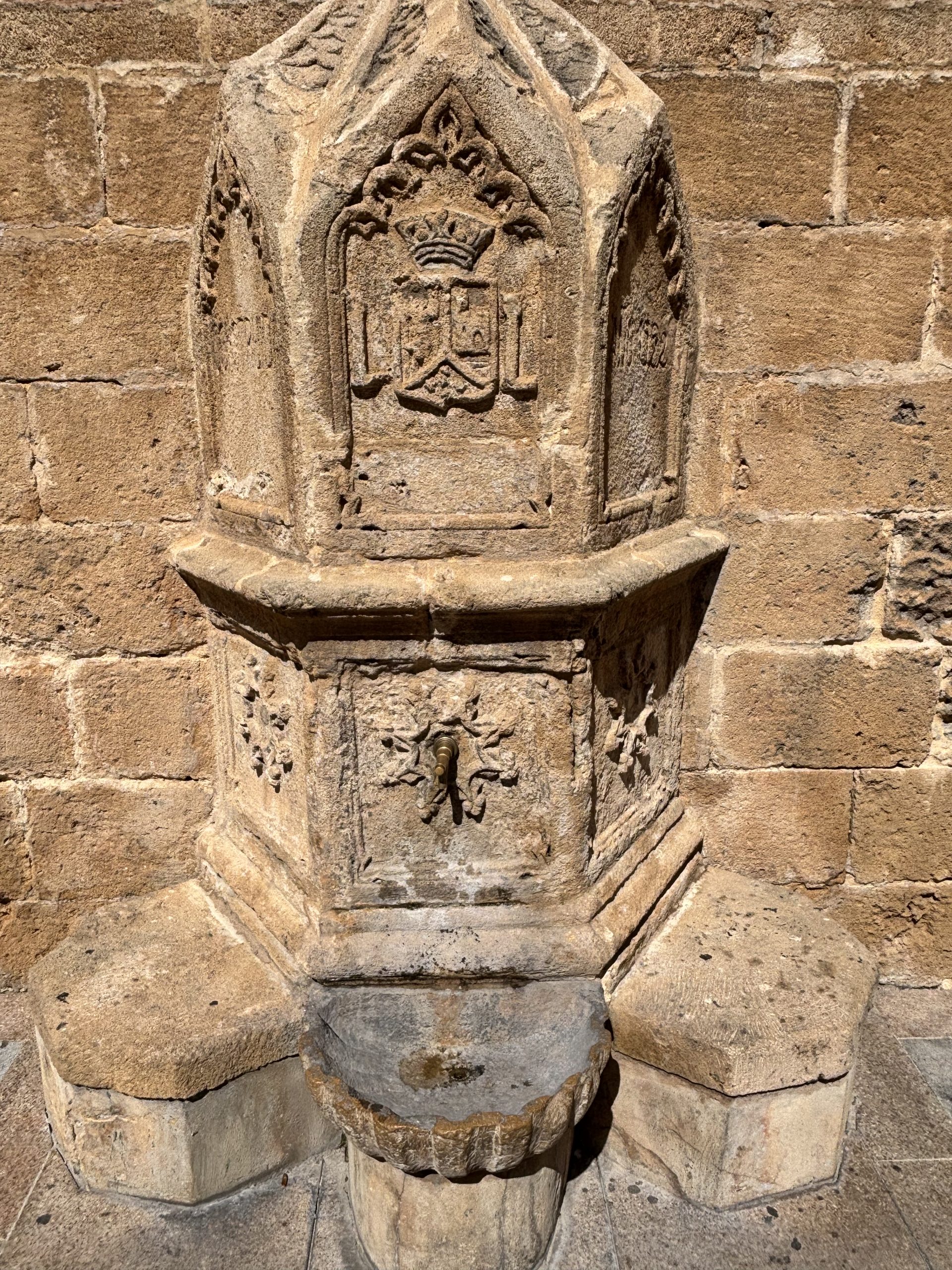
What the photographs here show is the full range, from clean ashlar blocks with sharp edges to surfaces worn almost past recognition, from careful restoration patches in noticeably lighter stone to sections that have been left entirely alone for centuries. The repairs are easy to spot. They’re the ones that don’t match!
The quarry these stones came from is documented in Quarry. The wear patterns on street-level surfaces are in Wear.