
The municipal buildings around the Plaça de l’Església tell you most of what you need to know about how Jávea organised itself over the centuries.
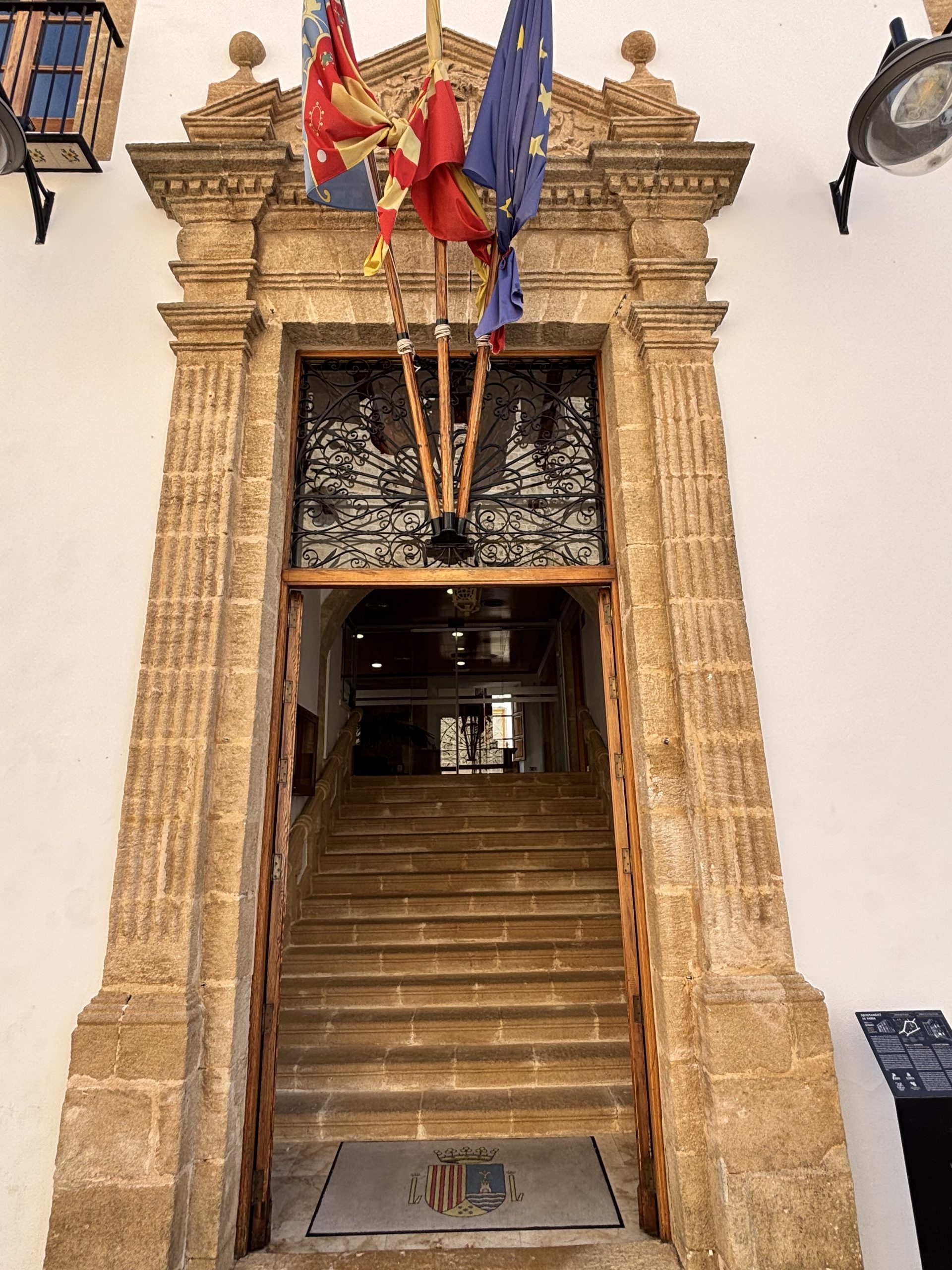
The Ayuntamiento is 18th century, built on the square opposite San Bartolomé. What most people don’t know is that it stands over a medieval cemetery, the original graves are still visible inside the building. The administration of the living, built directly on top of the dead. Nobody puts that in a tourist leaflet.
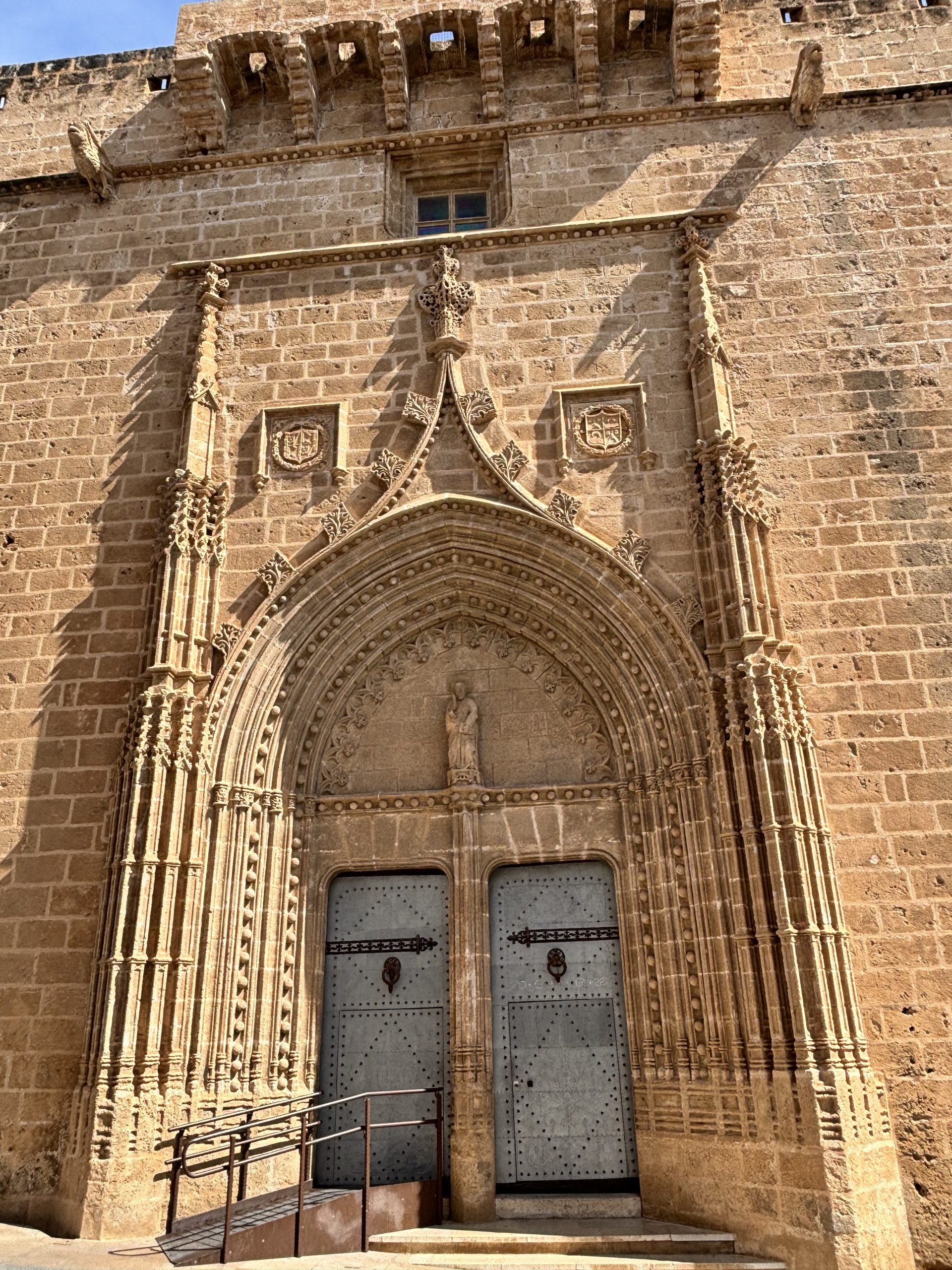
The church itself, the Iglesia Fortaleza de San Bartolomé is medieval, built to function as both place of worship and defensive structure. The tower is the giveaway. This wasn’t a town that felt entirely safe when it was built. The full history of the building is here.
The covered market alongside, built in 1946, has a vaulted ceiling worth looking up at. Most people don’t.
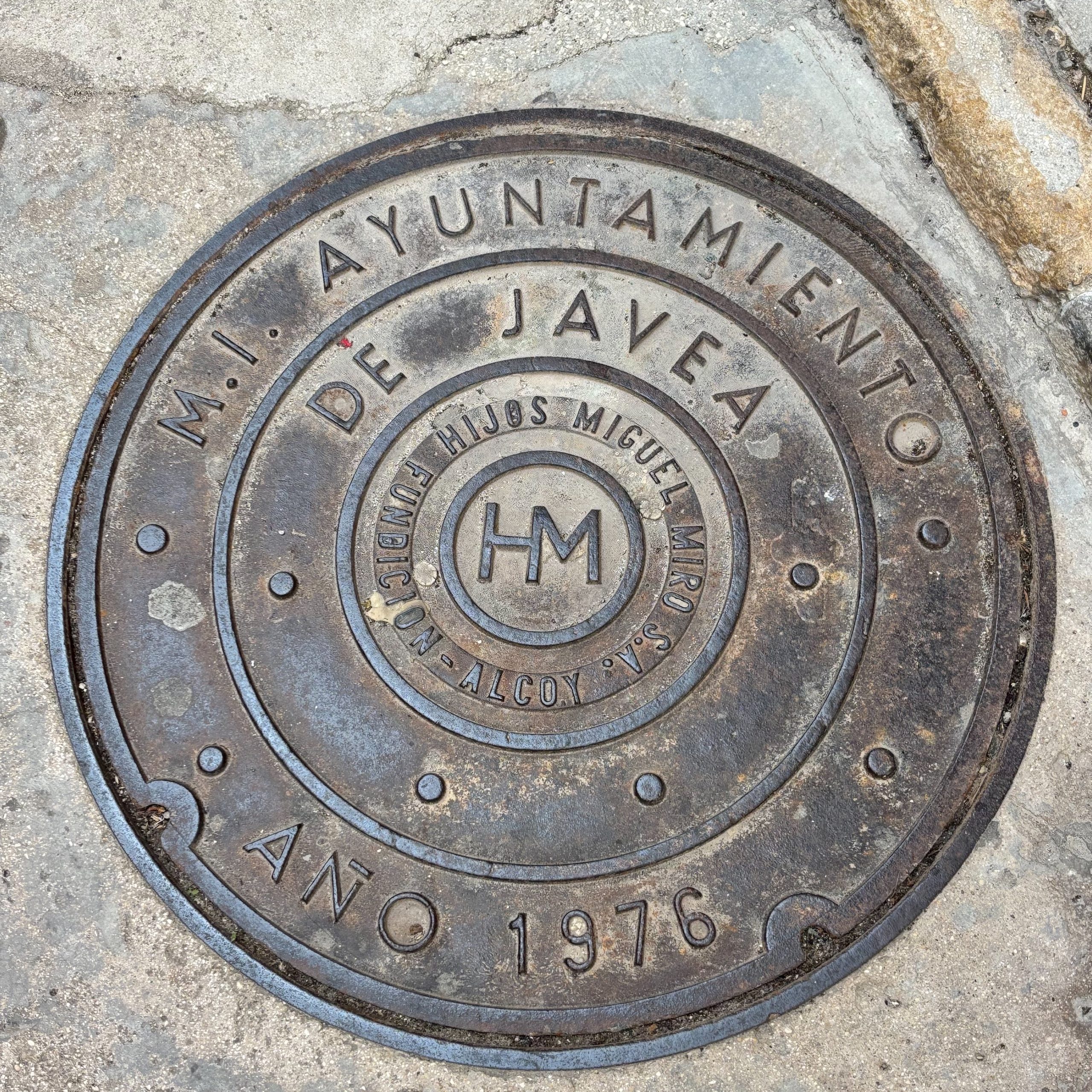
At ground level the municipal details accumulate – the Ayuntamiento de Javea manhole cover dated 1976, still in place in the paving. The town coat of arms carved in Tosca in at least two distinct versions on different buildings, the older one worn almost to abstraction. A cannon outside the church that has been there long enough to look like it belongs. A water fountain bearing the Xàbia crest at its base – the same fountain whose Año 1922 inscription is documented in the Inscriptions section.
The inscriptions on these buildings are covered in more detail in Inscriptions. The Tosca stone they’re carved from is in Stone.