The Church That Was Also a Fort
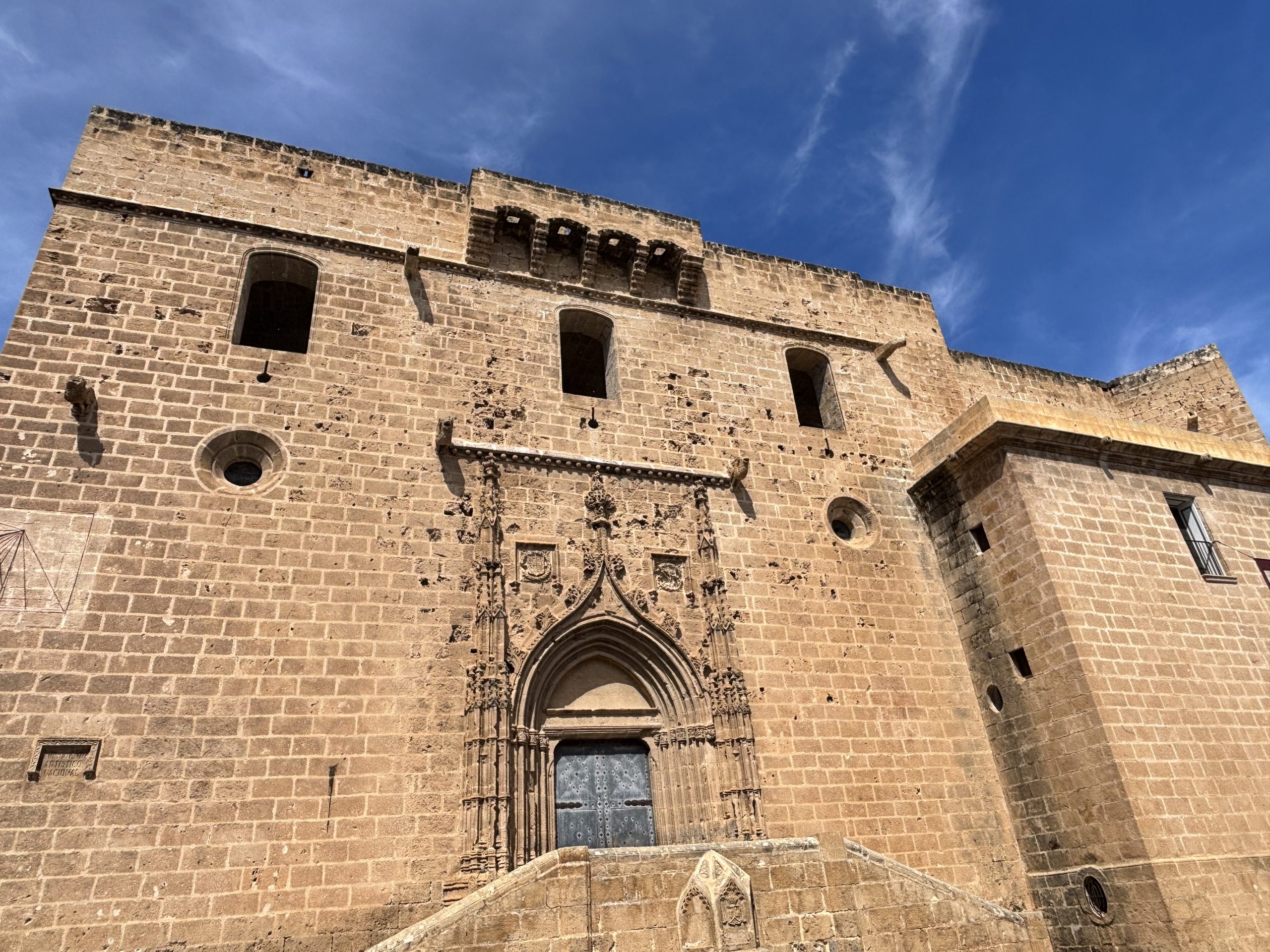
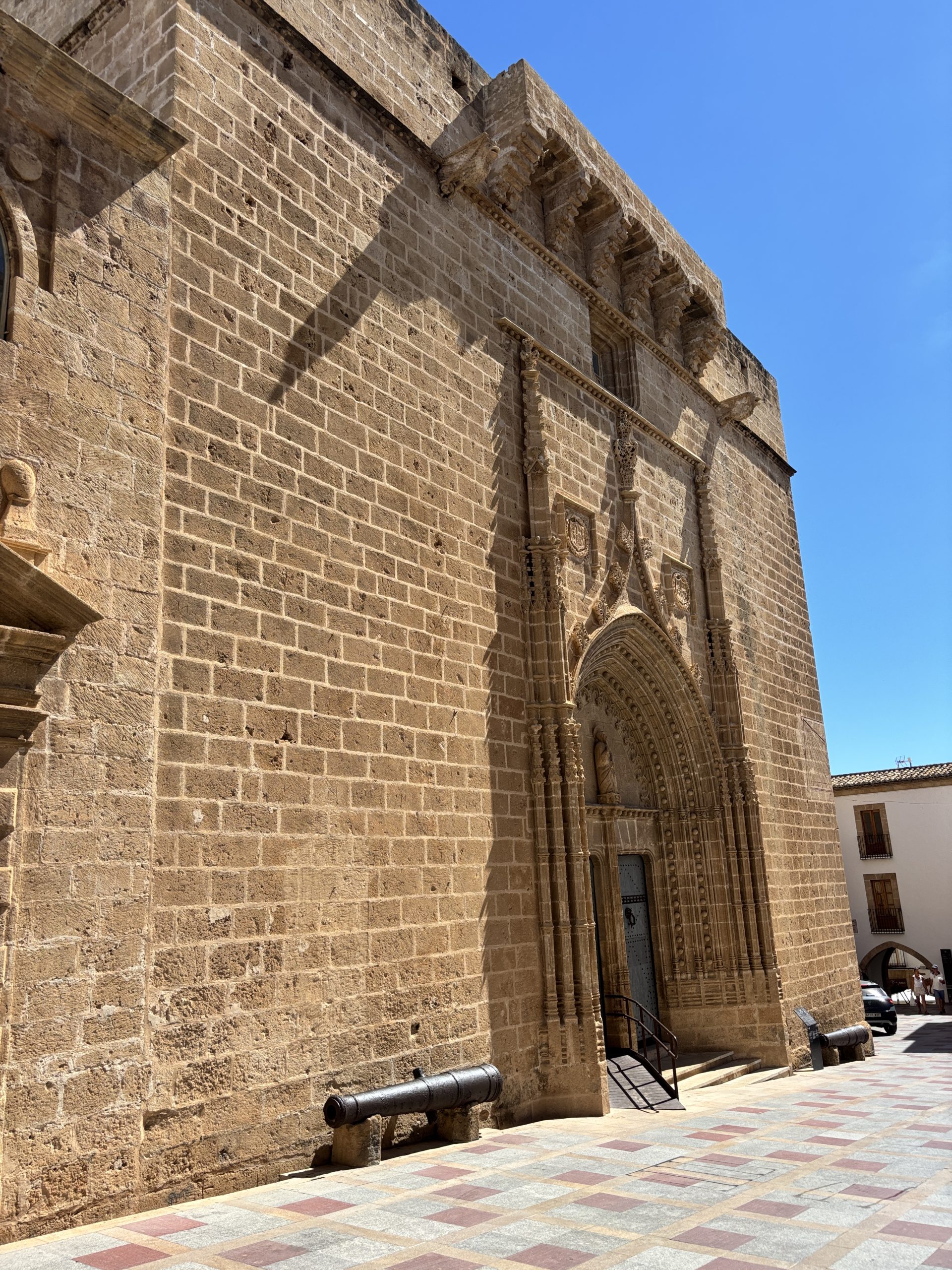
I’ve walked past San Bartolomé thousands of times. It doesn’t look like a church from the outside, not really. It looks like what it is, a building designed to keep people alive. The walls are thick enough to absorb a cannonball or two. The tower was a watchtower before it was a bell tower. The battlements are not decorative but were built to be functional. This was a town that needed somewhere to go when the ships appeared on the horizon and they built their church accordingly.
It hasn’t changed in the near 30 years I’ve been walking past it. There is not much you can do to a building like this and not much reason to try.

1304
The oldest part of the building, the presbiterio, was begun in 1304. Jávea at that point was a small coastal settlement that had been Muslim, then Christian for less than a century following the Reconquista. The first structure on this site incorporated an existing Muslim tower. That tower became the base of what you see today.
The original building was functional and modest. What stands now is largely the result of what happened two centuries later.
1513
By the early 16th century Jávea had a problem. The Barbary corsairs, operating from North Africa, were raiding the Valencian coast systematically. Villages were attacked, people taken as slaves, coastal settlements emptied by fear. These were simple farming folks. The response along this stretch of coast was to build defensively into everything, including the church.
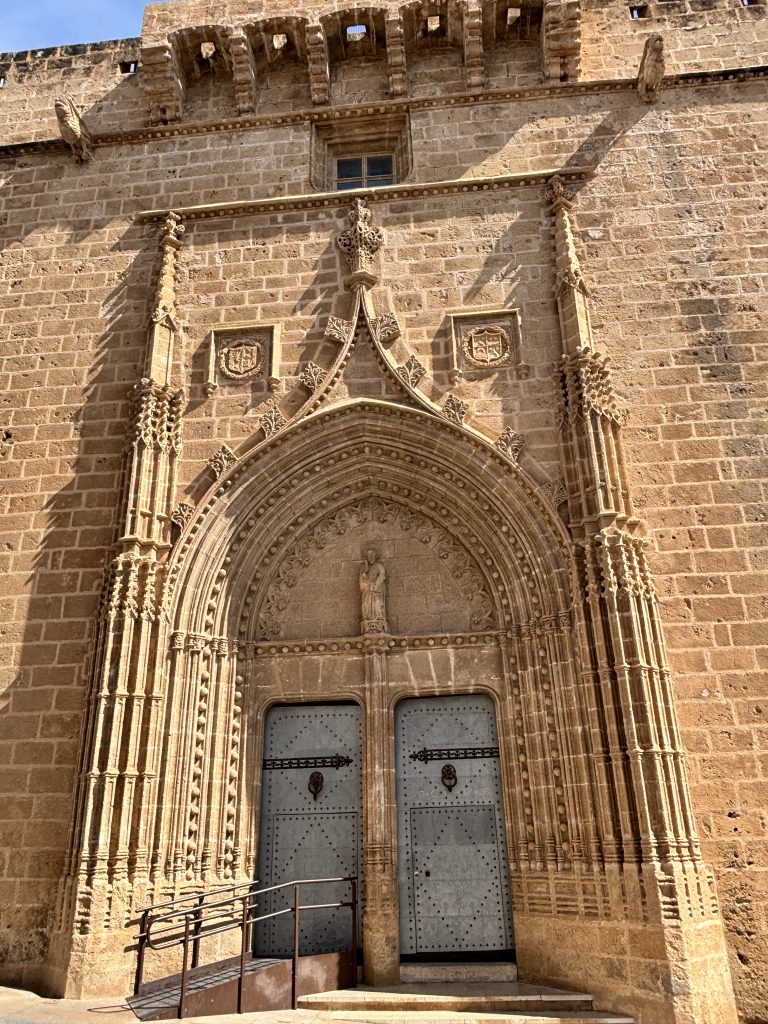
In 1513 work began on a major expansion. The architect was Domingo de Urteaga, a Basque master stonemason described in the records as mestre pedrapiquer. The project was financed by the Marquis of Denia, whose heraldic shields, alongside those of the Vila de Xàbia, still frame the main portal. Urteaga reused the walls of the existing fortification and built outwards and upwards, creating the single-nave Gothic structure with side chapels between the buttresses that stands today.
The result was classified as Isabelline Gothic, a Spanish variant of late Gothic characterised by elaborate surface decoration concentrated at the portals while the main body of the building remains austere. The two covers, the main portal of San Bartolomé at the feet and the side portal of San Gil with its double staircase, carry virtually all the ornamental detail. The walls carry almost none. This was deliberate. Decoration on a fortified wall is a distraction from its function.
Built to Defend
The military specification is visible once you know what you’re looking at.
The matacans, stone brackets projecting from the wall above both doors (seen at the top of the picture above), allowed defenders to drop material on anyone forcing the entrance. The upper terrace is flat, accessible and surrounded by battlements and parapets. There are gun slits for mortars. The tower has two distinct phases: the 14th century base, which is a military watchtower and the 16th century bell tower added on top when the immediate threat had passed enough to allow it.
Inside, the galleries above the side chapels are where the population sheltered when the corsairs came. These tribunas, as they are called, were restored in 2020 after centuries of disuse. Standing in them you are standing where frightened people stood watching the sea.
The building functioned as part of a wider coastal defence system alongside towers and walls built along the Levantine coast throughout the 16th century. San Bartolomé de Jávea and Santa Catalina de Teulada are considered the finest examples of the defensive church type in the Valencian Community.
The Stonemasons
Look closely at the stonework and you will find glyptographic signs cut into the Tosca blocks. These are the personal marks of the individual picapedrers who cut and laid each stone, incised into the surface to credit their work. They are still there. The men who made them have no other monument.
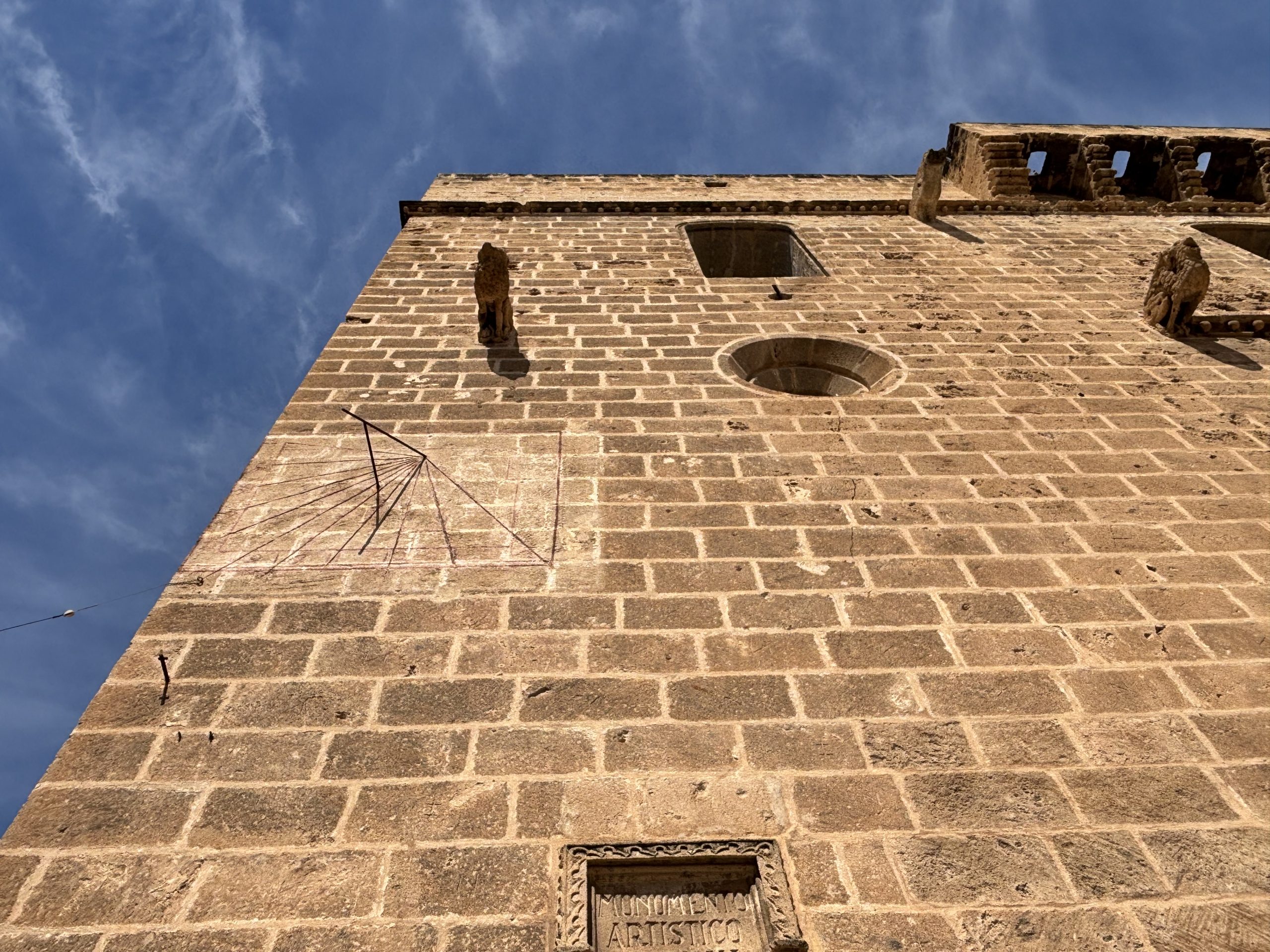
The stone itself came from the Muntanyar quarries a mile down the coast. The ribs, keys and vault plates of the star crossover ceiling are all carved in Tosca. So is every arch, every moulding, every decorative element on both portals. Domingo de Urteaga specified local stone because there was no better material available anywhere on this coast and he knew it.
What Happened Here
The building has absorbed far more than weather.
During the Napoleonic wars, French troops quartered in the Castillo de Denia made repeated incursions into Jávea between 1810 and 1812. In August 1812 the town was sacked and there was fighting inside the church. The cannons now mounted on the facade of the building came from the Castillo de San Martín after it was destroyed. They ended up here because there was nowhere else to put them and because it seemed appropriate.
During the Civil War in 1936 the church was set on fire. The valuable artworks inside were destroyed. The building survived because Tosca does not burn so easily it seems.
1931 and 2020
San Bartolomé was declared a National Historic-Artistic Monument in 1931, one of the earliest such designations in Spain. It was reclassified as a Bien de Interés Cultural in 2018.
In 2020 a restoration programme addressed cracks in the structure, damp throughout, and the bell tower. The tribunas above the side chapels were reopened. The battlements, removed in the 17th century, were partially reinstated.
The work took most of 2020. The building looked the same when it was finished as it did when it started. That was the whole point.
What It Is Now
It is still a working parish church. Mass is said here. Weddings happen here. The Semana Santa processions leave from here and return to here.
It is also a 14th century military tower reused from a Muslim fortification, a 16th century Gothic expansion built to stop slave raiders, a Civil War survivor, a National Monument and the building that gives the Old Town its reason for existing where it does.