The Stone the Old Town of Xabia is Made Of
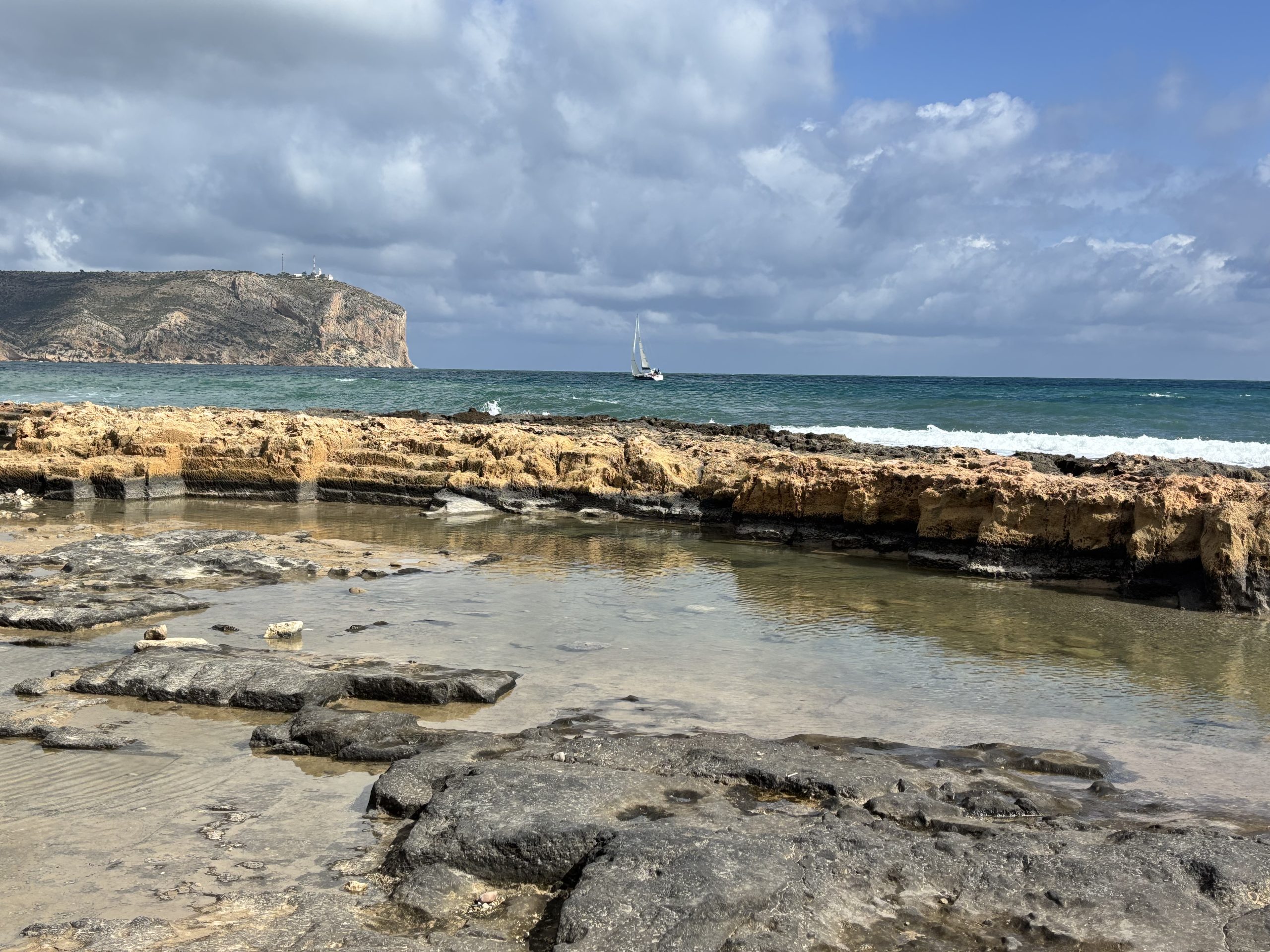
I’ve walked down to the Muntanyar more times than I can count. It’s about a mile from the Old Town, down to the Port, along the coast toward the Parador, and then you’re on it without quite realising. The rock just changes. The coastline stops being natural and starts being worked. Or rather, you realise it was worked, centuries ago, and what looks like a natural formation is the negative space left behind by two thousand years of extraction.
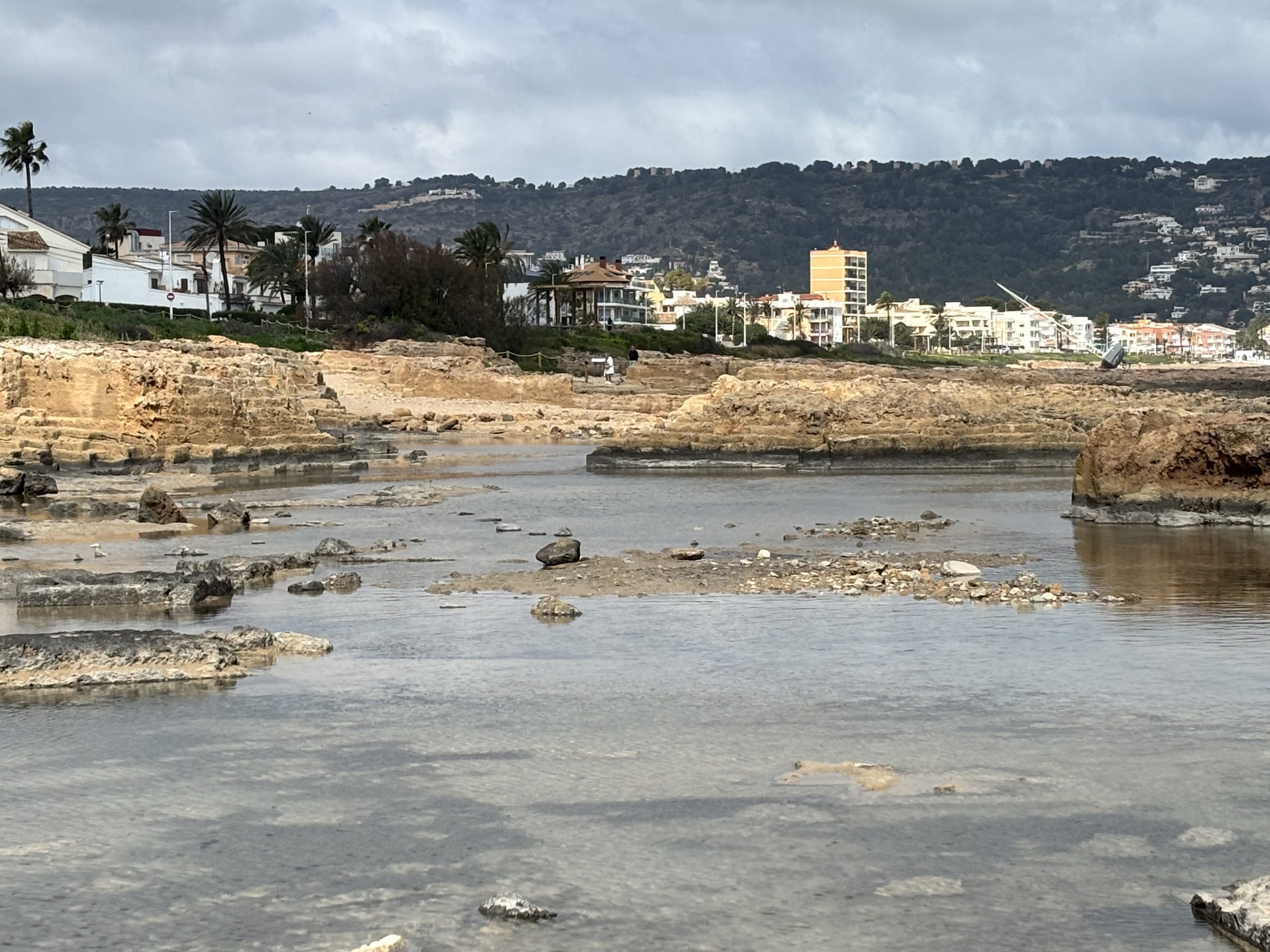
Stand there for a few minutes and you start reading it properly. The llavades, the horizontal strata of the original dune layers, run through the rock face in clear bands. The pels, the natural vertical fissures, cross them at intervals. Between those two sets of lines, the arrancadors opened the stone. They didn’t fight with the rock. They read it, understood it, found the lines it wanted to naturally break along and worked with them. The extraction marks are still visible. Clean, deliberate, geometrically precise.
The Stone

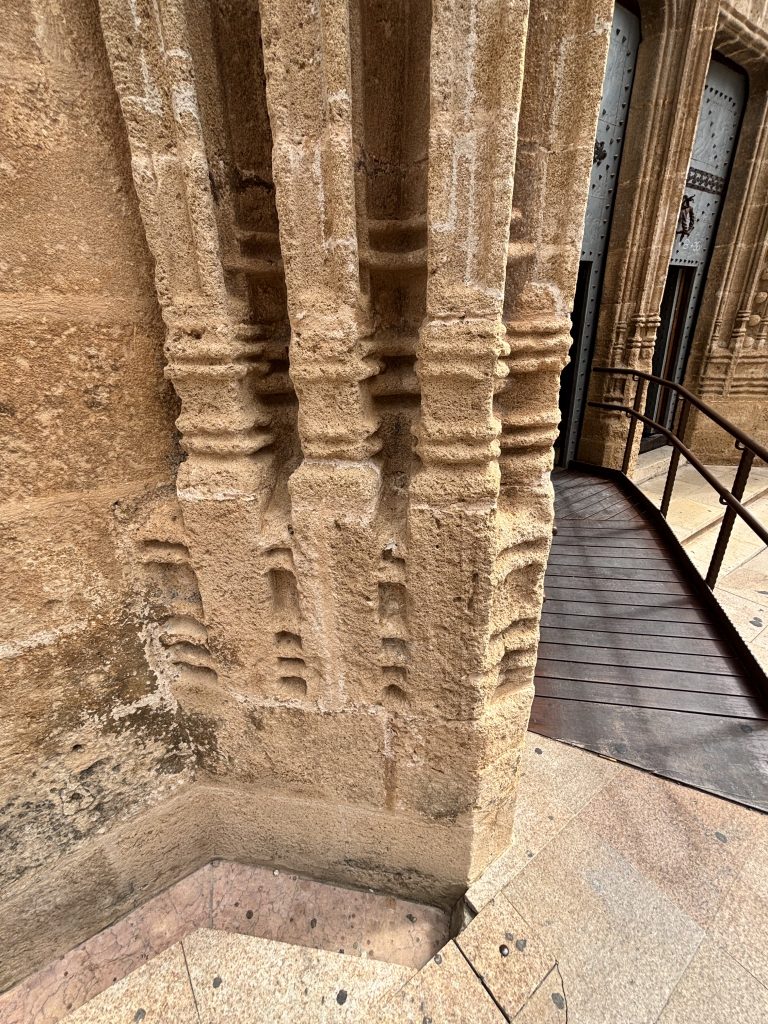
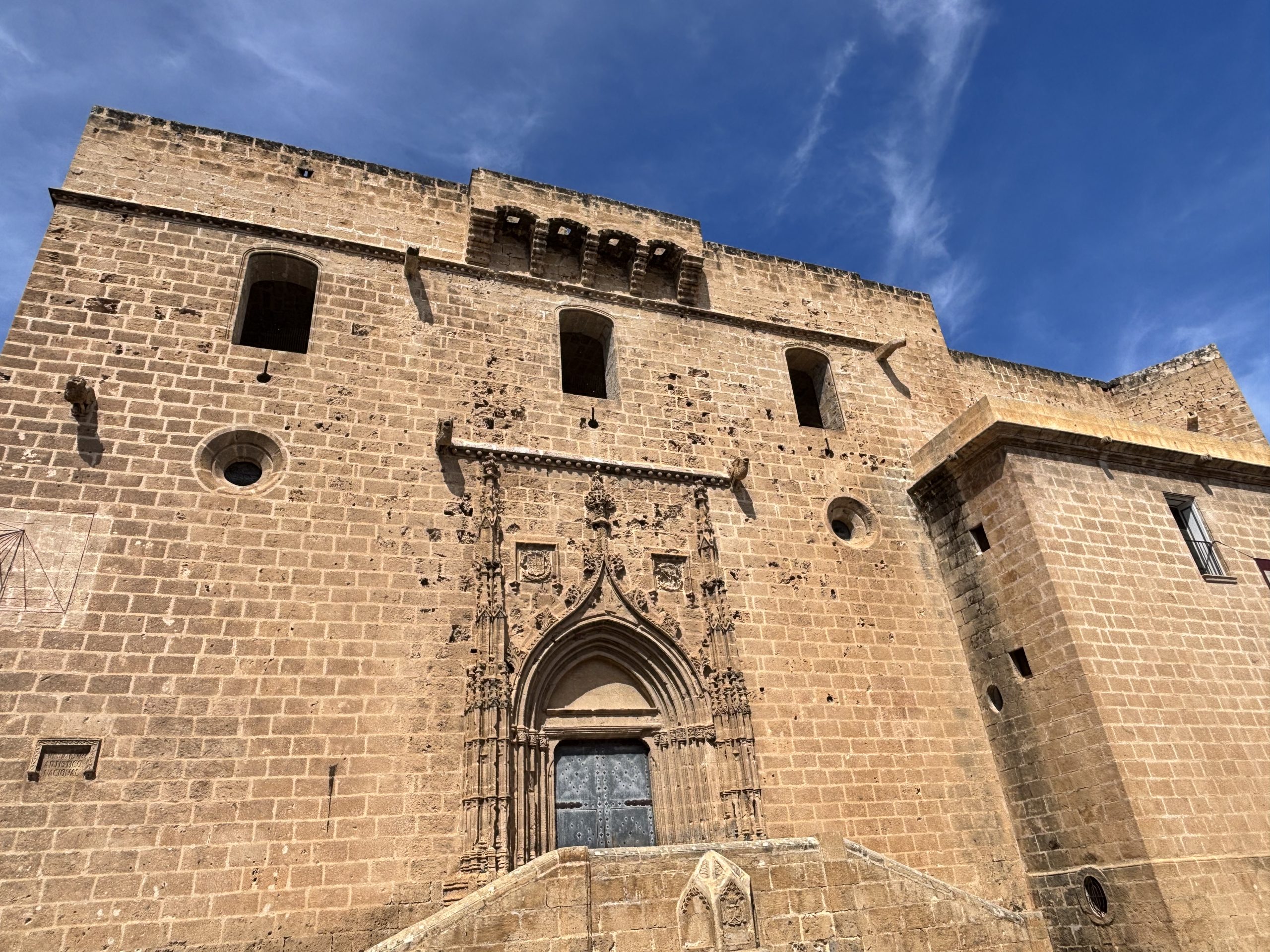
Tosca, known formally as toba calcárea, is a calcareous sandstone formed from coastal dunes approximately one hundred thousand years ago. It is not a hard stone. That is precisely why it was used. Fresh from the quarry it cuts quite easily, holds detail well and can be worked into arches, lintels, mouldings and decorative panels with hand tools. Exposed to air it hardens gradually, developing the surface resistance that has allowed it to survive centuries of salt air, rain and use. The colour shifts with light conditions, pale in the morning, deep gold by late afternoon which is why the Old Town looks different depending on when you walk through it.
The Muntanyar de Dalt and the Muntanyar de Baix, the upper and lower quarries, are the most significant Tosca deposits not just in Xàbia but on the entire Valencian coast. A third site, the Cova Tallada, sits at the foot of the cliffs at Cap de Sant Antoni. Archaeological evidence places its use in the Andalusian period, from the 12th century. The coastal quarries were worked from Roman times. Everything between those two dates, and for centuries after was built from what came out of these two beaches.
The Two Trades
The extraction and the carving were distinct skills, and often distinct people.
The arrancadors opened the rock. Working directly at the quarry face, they read the llavades and the pels, identified the natural break lines, and used wedges and levers to separate the basic blocks. It was physical, skilled work. Not brute force but applied understanding of how this particular stone behaved. Get it wrong and the block shattered. Get it right and you had a clean rectangular piece that could be transported and worked.

The picapedrers, pedrapiquers (in Valencian), were the carvers. They took the raw blocks and transformed them into sillares, the dressed stone blocks used in walls, and into the more complex elements: arches, mouldings, decorative surrounds, inscription panels. The Gothic portal of San Bartolomé, with its elaborate carved stonework, is their work. So is every Tosca arch over every doorway in the Old Town. So is the lettering on every inscription.
They were also masters of pedra en sec, dry stone construction without mortar, building the marjals, the agricultural terraces that still cover the hillsides around Xàbia, and the riuraus, the distinctive arcaded structures used for drying raisins that remain one of the most recognisable features of the Marina Alta landscape.
La Xara
The village of La Xara, inland from Xàbia and close to the port of Denia, was historically the centre of the picapedrer tradition in the Marina Alta. The most skilled craftsmen came from here. The trade passed from father to son across generations, the knowledge of how to read and work stone accumulated over centuries.
The trade is now nearly extinct. The researcher Josep Ivars Pérez has spent years documenting the memory of the last pedrapiquers, recording their techniques, their vocabulary, their understanding of a material and a craft that has no commercial future. La Xara is developing a Museu del Picapedrer to preserve what remains of it. It does not yet exist. When it does, it will be worth the trip.
1972
Extraction from the Muntanyar quarries was banned in 1972. Not because the stone was exhausted, there is plenty of it, but because what remained was recognised as natural and archaeological heritage that continued extraction was destroying. The toscars are now protected. You can walk through them, photograph them, read the extraction marks and the geological strata. You cannot take anything out.

What was banned in 1972 had been continuous for at least two thousand years. Roman Xàbia used this stone. Medieval Xàbia used it. The builders of San Bartolomé used it. The families who put up the residential streets climbing from the Plaça del Convent used it. The last blocks came out of the Muntanyar sometime before 1972 and went into buildings that are still standing.
Back to the Old Town
Walk back up from the quarry and the connection is obvious in a way it isn’t when you approach from the other direction. The stone on the coastal rock face and the stone in the church wall are the same material at different points in the same journey. One still in the ground, one shaped and placed and standing for five centuries.

The arrancadors read the rock and opened it. The picapedrers shaped what came out. The builders laid it. And somewhere in La Xara, the last people who understood all of that from the inside are being recorded before the knowledge goes entirely.
It’s a mile from here to there. It always was.