
The Old Town I Remember
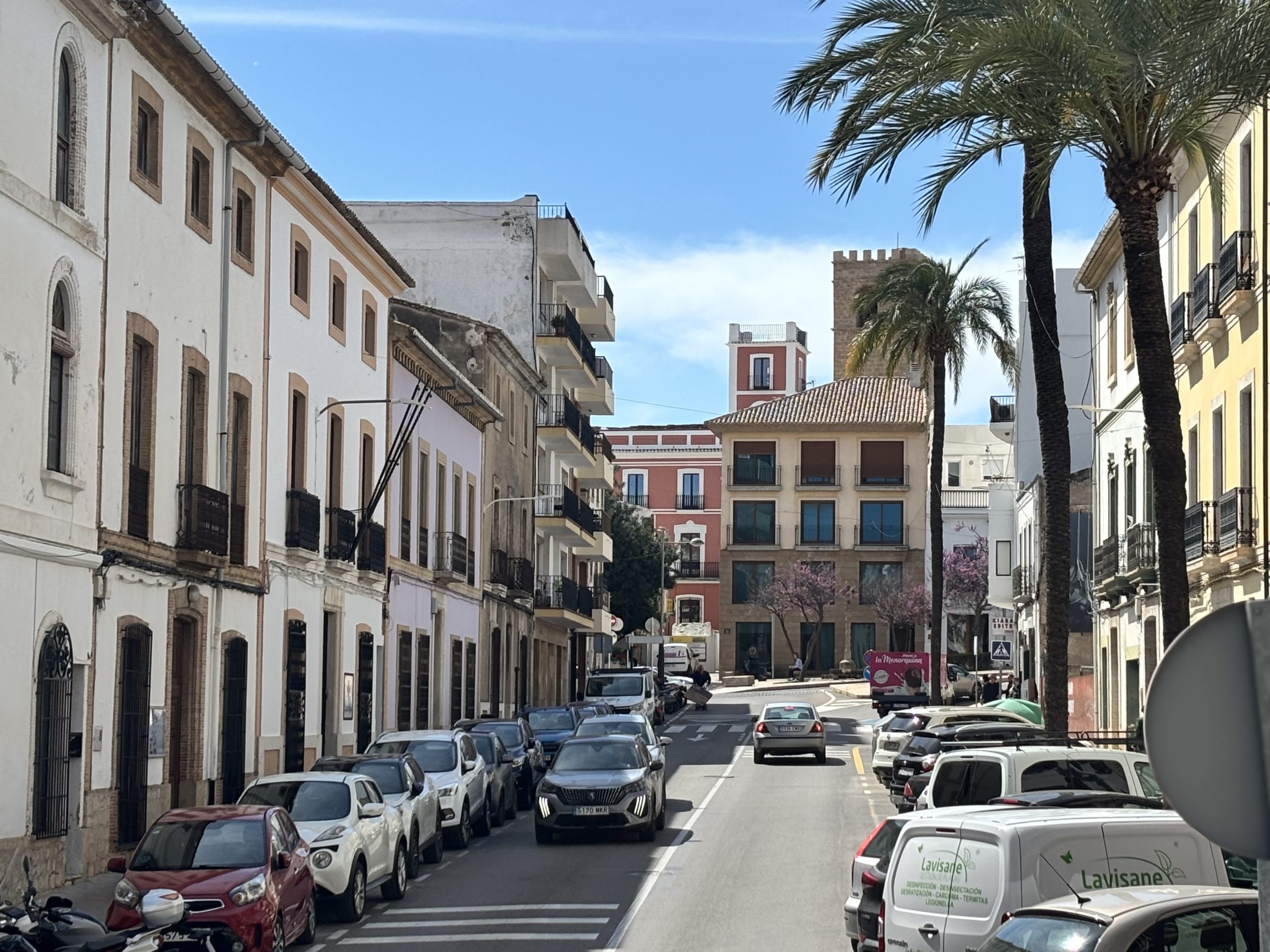
I came to Jávea in 1997. I was not looking for a project. I was looking for somewhere to eat and drink properly in the sun after too many years in an office where the highlight of the week was someone bringing in slightly stale biscuits on a Friday.
The Old Town was not on any list I had. Nobody talked about “the historic centre” then. Estate agents had not yet discovered phrases like authentic Mediterranean lifestyle. It was just the town. You parked badly somewhere near the Correos, walked uphill because that was where the noise was coming from, and eventually ended up under San Bartolomé with a drink in your hand wondering why life in England suddenly seemed unnecessarily complicated.
How it Smelled
Before anything else, the smell.
Sardines cooking somewhere nearby over charcoal. Damp stone after the evening watering. Horses. Black tobacco. Garlic hitting hot oil from kitchens you could not see. Two-stroke fumes from Vespas and Mobylettes that seemed permanently trapped in the narrow streets around Carrer Major and the Placeta del Convent.
That particular tobacco smell has vanished completely. Thick, dark smoke drifting out of bars with wooden doors permanently wedged open. Men in short-sleeved shirts playing cards under yellow lighting at eleven in the morning. Coffee, brandy and tobacco all mixed together into something oddly comforting. The Vespas however appear to have multiplied, along with their noise.
When a smell disappears properly, it takes an entire world with it. You cannot reconstruct it from photographs. Nobody has ever managed to half-remember the acrid black tobacco and grilled sardines smells at the same time.
The Market and the Butcher
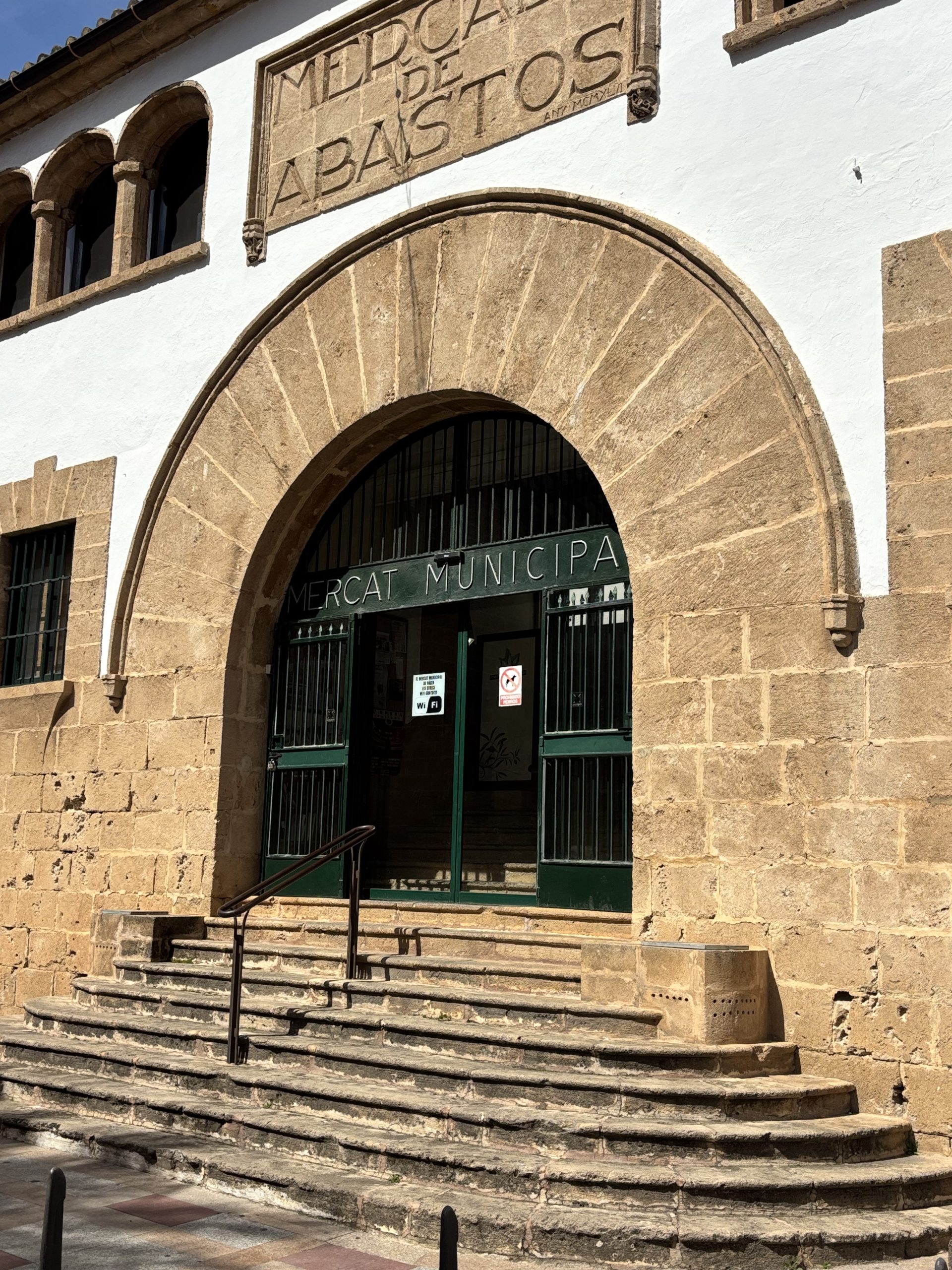
The covered market beside San Bartolomé opened very early. Earlier than seemed necessary. By seven the fish counters were already loud and the Guardia Civil were already leaning against the bar drinking coffee and brandies that looked strong enough to remove paint.
There was a butcher opposite the Plaça del Convent where my father insisted on buying chicken. He trusted this man completely despite barely understanding a word he said. There was always a queue stretching halfway outside and nobody minded because the queue was part of the morning. People talked. Recipes were exchanged. Arguments about tomatoes took place with extraordinary seriousness. The tobacco smell lingered even here.
The supermarket has not improved on this system in any meaningful way.
You still had proper ferreterías then too. Narrow hardware shops where every object in human history appeared to hang from the walls. Lightbulbs, rope, screws sold individually, buckets, taps, strange agricultural tools whose purpose nobody under sixty could identify. The sort of shops where the owner never wrote anything down but somehow knew exactly what everyone owed. These have long gone, replaced by nearby China markets.
Thursday market day changed the whole town.
People came in from Jesús Pobre, Gata de Gorgos, Pedreguer and the inland villages. Basket weavers from Gata. Men selling almonds and raisins. Women with vans full of plants that looked half-dead until you put them in the ground. You heard Valenciano everywhere, faster and rougher than the careful textbook Spanish foreigners were attempting in restaurants.
The square around the market and the church filled completely. It felt old in a way that did not seem performative. Nobody was recreating tradition for visitors. The market existed because people needed socks, olives and rope.
The Streets
Bullfight posters on almost every lamp post.
Old men gathered in nearly every square, particularly around the benches near the church and along Carrer Príncep d’Astúries, not doing anything exactly, just occupying the town with tremendous professionalism. They had mastered the art of sitting still while observing absolutely everything.
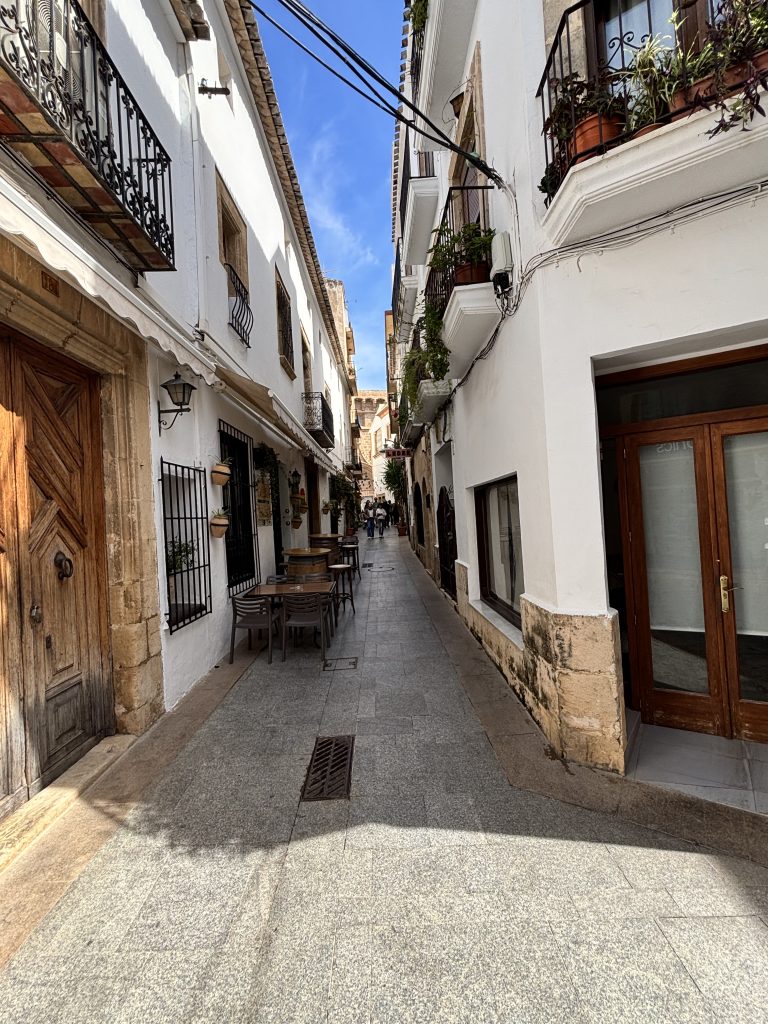
Older women sat in doorways peeling beans or talking across streets barely wide enough for a small car.
The mopeds went everywhere the streets physically allowed them to go, which was most places. Half the time you heard them before you saw them, buzzing uphill toward the Placeta del Convent like irritated insects.
Horses and carts were still genuinely functional. Not romantic. Not decorative. Someone would tie a horse outside a bar and disappear inside for twenty minutes without anybody finding this remotely unusual.
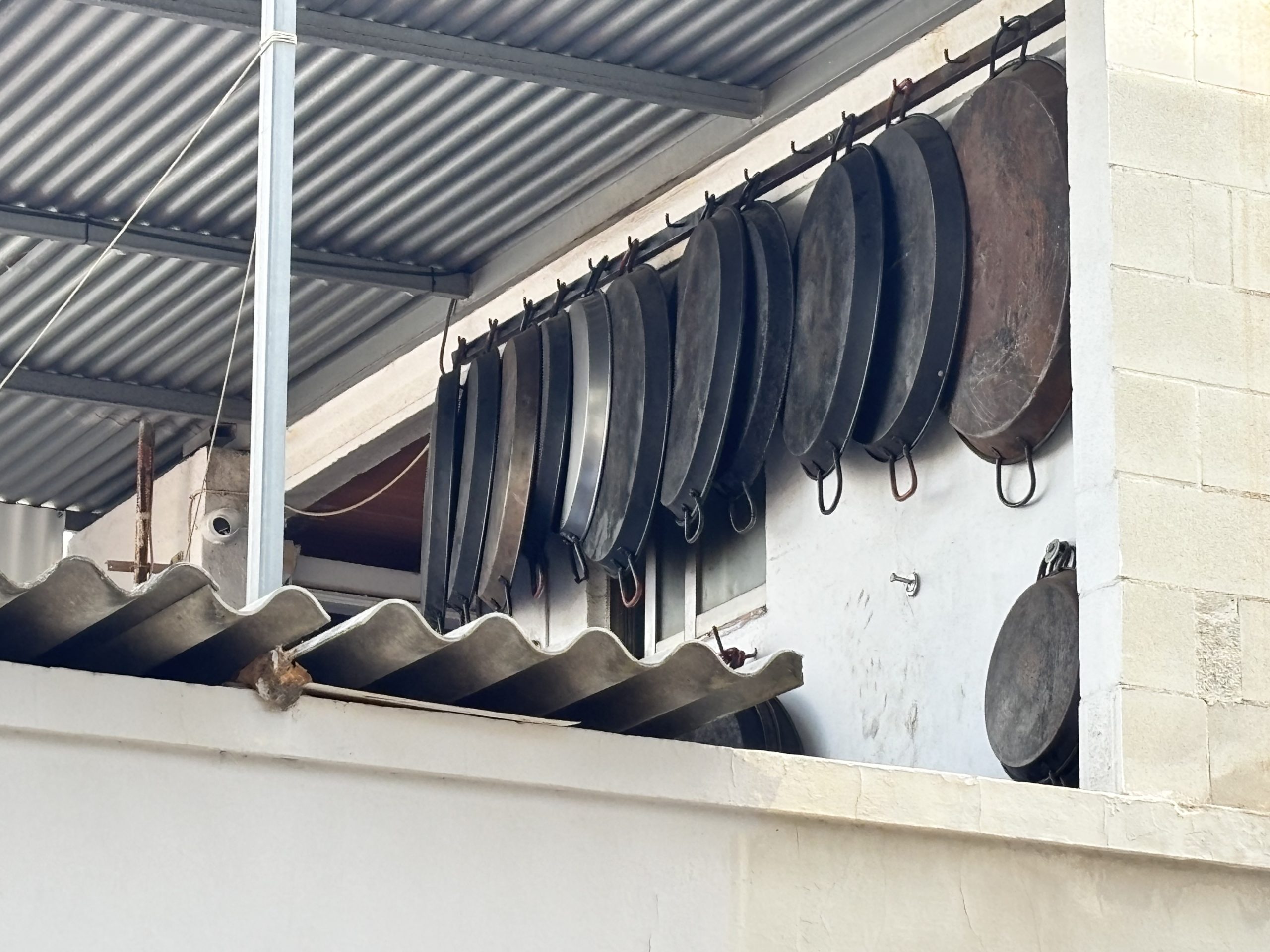
The old bars like Imoerial around the centre stayed dark even in summer. Places with tiled floors, metal coffee machines that hissed constantly and calendars from insurance companies hanging permanently on the walls. If you walked into one at midday there would already be men drinking cassalla and arguing about Valencia CF as if civilisation depended on it. The smell of paella bubbling away. Prices in Pesetas.
Nobody hurried anywhere unless they were carrying bread.
The Festivals
The religious festivals were something else entirely.
Not organised entertainment. Not safe. Properly loud.
Firecrackers exploded without warning from side streets and small children seemed oddly trusted with explosives. The first time one went off near me I nearly dropped an entire beer across the Plaça de Baix.
The bull runs through the Old Town felt chaotic in a way that would probably horrify modern risk assessors. Wooden barriers appeared. Entire streets changed function overnight. Everyone somehow knew where to stand except the foreigners.
At night the processions filled the streets completely. Incense drifted between the Tosca walls. Brass bands echoed through streets too narrow for the sound to escape properly. You could hear drums long before you saw anything.
And then there was San Juan.
The bonfires. The noise. Teenagers throwing firecrackers at each other with astonishing confidence. Smoke hanging over the town until sunrise. The sea of people moving downhill toward the Port after midnight.
It was less curated then. More exhausting. More alive.
The Places Everyone Used
Children played football against walls they definitely should not have been kicking footballs against.
People sat on the steps around the church because there was nowhere else cooler.
The old fountain near the market always seemed to have somebody leaning against it talking about somebody else.
You walked everywhere because parking was hopeless even then, though nobody yet spoke about parking as though it were a humanitarian crisis.
The cemetery road on the edge of town still felt properly outside the town. Beyond it things became agricultural very quickly. Vineyards, rough plots, abandoned riuraus slowly collapsing into themselves.
At Christmas the nativity scenes appeared in shop windows and half the town seemed to know who had made each figure personally.
What’s Gone
The black tobacco is gone.
The horses are just about gone.
The market on Plaça de la Constitució is still there. Gone seem to be the artisanal vendors, replaced by seemingly endless tat.
Many of the bars are brighter now, cleaner, more self-aware somehow. Places that once had old men drinking vermouth at eleven in the morning now serve flat whites to cyclists in expensive sunglasses and offer a fusion menu.
The old posters are gone too. The walls look tidier. More international.
The old men still gather in the squares but there are fewer of them and they are older than they were, which is mathematically inevitable but still feels unfair.
The Old Town is cleaner now. Better restored. Better lit. The crumbling buildings have mostly been repaired. The shutters painted. The stonework cleaned.
What disappeared during that process is harder to explain.
Perhaps the town became conscious of itself. Conscious that people were looking at it.
In 1997 the Old Town did not think of itself as beautiful. It was simply where life happened.
What Hasn’t Changed
Some things have not moved at all.
The building opposite the church with the Tosca arch and the ceramic pots still looks exactly the same. Every time I pass it I expect to see the same people standing outside from forty years ago.
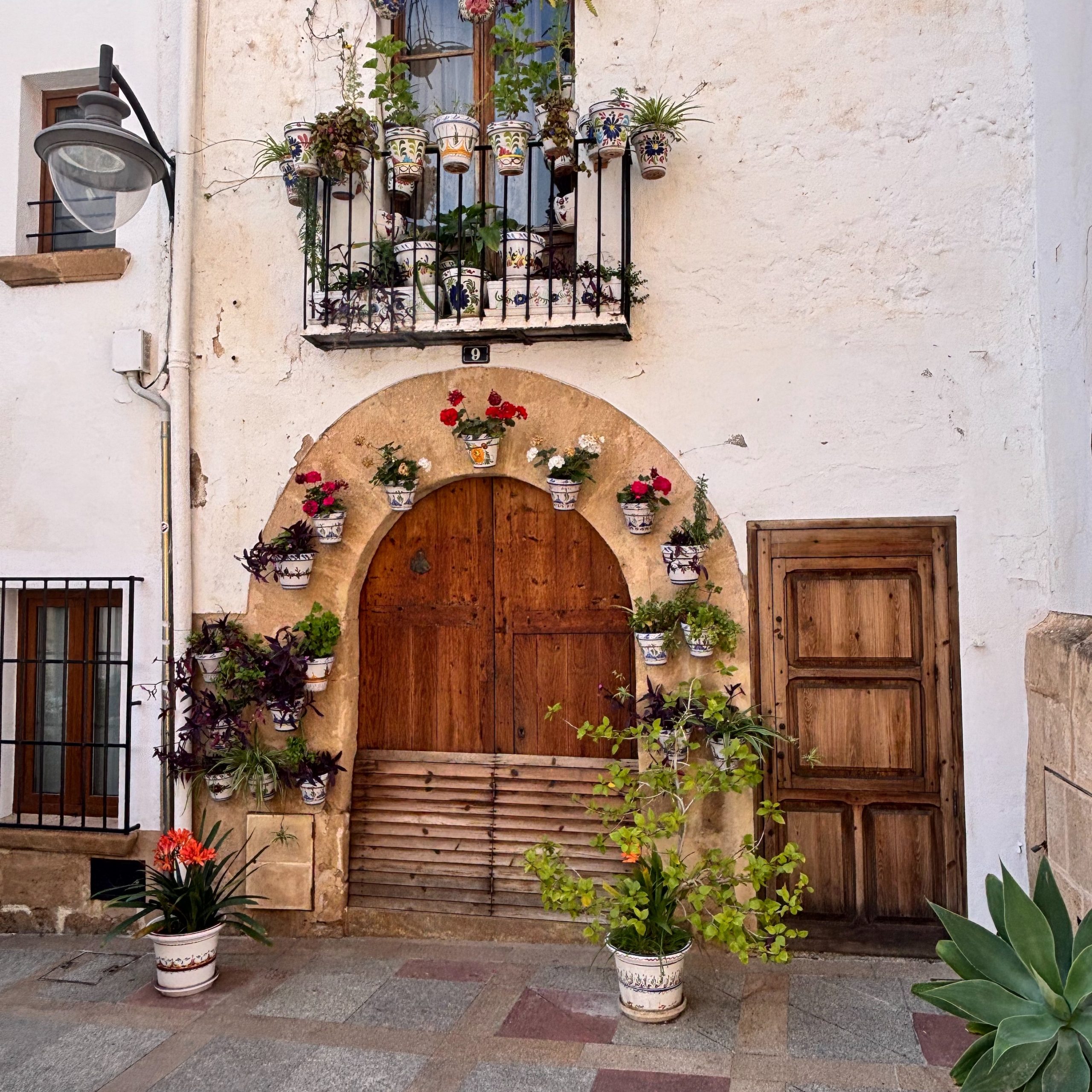
The streets are still impossibly narrow.
The stone is still the same stone.
The wooden flood slats still appear against doors when autumn rain threatens.
The brass hand and ball knockers are still fixed to the same doors, worn smoother each year by hands that probably belonged to several generations of the same family.
San Bartolomé has not changed because it was built on the assumption that time would pass around it rather than through it.
The bull runs still happen.
The firecrackers still go off without warning.
And the old bodega is still there.
The son is fatter than the father was.
But then again, so am I.